

 Cash flow mistakes often destroy small businesses faster than poor sales or weak demand. Many owners focus on revenue, yet your survival depends on how cash moves daily. When cash slows, your ability to operate weakens quickly. Therefore, you must understand where money enters and leaves your business. Without that clarity, even strong companies can collapse under pressure.
However, many business owners overlook early warning signs. As a result, they react late when cash problems already exist. Instead, you need consistent awareness of your financial position. When you monitor cash closely, you gain control over decisions and timing. This awareness helps you avoid preventable setbacks.
Moreover, cash flow reflects your business reality more than profit reports. While profits look strong on paper, they do not pay your bills. Instead, your available cash funds payroll, inventory, and operations. Because of this, poor cash management creates stress across every part of your business. Consequently, even profitable companies can struggle to stay open.
At the same time, many mistakes stem from simple habits and assumptions. You may delay invoicing, overspend, or ignore small expenses. Although each action seems minor, the combined impact grows quickly. Therefore, small decisions can create serious financial pressure over time.
Ultimately, your goal is to build steady, predictable cash flow. When you control cash, you gain flexibility and stability. As a result, you can make confident decisions and grow sustainably. By understanding common pitfalls, you can protect your business and avoid costly setbacks.
CONFUSING PROFIT WITH CASH FLOW
Many business owners believe profit equals financial strength. However, that assumption often leads to serious cash flow mistakes. Profit shows earnings on paper, while cash reflects what you can spend today. Therefore, you must treat these two metrics differently in daily operations.
For example, you may record a profitable sale before receiving payment. As a result, your books show income, yet your bank account remains unchanged. This gap creates confusion and limits your ability to pay expenses. Consequently, you may struggle even when your reports look positive.
Moreover, profit calculations include non cash items like depreciation. While these entries affect financial statements, they do not impact available funds. Because of this, relying on profit alone can give you a false sense of security. Instead, you need a clear view of actual cash movement.
At the same time, timing plays a major role in your financial health. Revenue may arrive weeks or months after a sale. Meanwhile, expenses often require immediate payment. Therefore, mismatched timing can create cash shortages quickly.
In addition, many owners focus heavily on sales growth. While growth matters, it does not guarantee liquidity. Without strong cash management, growth can increase financial strain. As a result, you may expand while your cash position weakens.
Ultimately, you need to track both profit and cash flow consistently. When you understand the difference, you make smarter financial decisions. This clarity helps you avoid unnecessary risk and maintain stability.
POOR CASH FLOW FORECASTING AND PLANNING
Many small businesses operate without a clear financial forecast. As a result, they face avoidable cash shortages and uncertainty. Poor planning ranks among the most common cash flow mistakes. Without projections, you cannot anticipate gaps or prepare for upcoming expenses.
First, forecasting helps you understand future cash needs. When you map expected income and expenses, patterns become visible. Therefore, you can plan ahead and adjust your strategy. This visibility reduces stress and improves decision making.
However, many owners rely on current bank balances alone. While this provides a snapshot, it does not show future obligations. Because of this, you may feel secure today while facing a shortage next month. Consequently, short term thinking creates long term problems.
Moreover, unexpected expenses can disrupt your operations quickly. Equipment repairs, supplier changes, or delays in payments can strain your finances. When you lack a plan, these events create immediate pressure. Therefore, forecasting gives you a buffer against uncertainty.
At the same time, consistent updates keep your projections accurate. Markets change, and your business evolves over time. When you adjust forecasts regularly, you maintain control. This habit helps you respond quickly to new conditions.
In addition, forecasting supports better spending decisions. You can evaluate whether purchases align with your cash position. As a result, you avoid overspending during tight periods. This discipline strengthens your financial stability.
Ultimately, planning gives you confidence and direction. When you understand your future cash position, you act proactively. This approach protects your business and supports sustainable growth.
OVERSPENDING ON GROWTH TOO QUICKLY
Growth often excites business owners and drives ambitious decisions. However, rapid expansion can create serious cash flow mistakes. When you spend aggressively, your cash reserves decline faster than revenue increases. As a result, growth can weaken your financial position.
For instance, hiring new staff increases payroll costs immediately. Meanwhile, revenue from expansion may take time to develop. This delay creates a gap between expenses and income. Consequently, your cash balance may drop quickly.
Moreover, large inventory purchases can strain your finances. While stocking up supports sales, it also ties up cash. Because of this, you may struggle to cover other operating costs. Therefore, inventory decisions require careful planning.
At the same time, marketing investments can grow quickly. Advertising campaigns often demand upfront spending. Although they may generate future returns, the timing matters greatly. Without proper planning, these costs can reduce available cash.
In addition, many owners underestimate the true cost of expansion. New locations, equipment, and systems add unexpected expenses. As these costs accumulate, your financial pressure increases. Therefore, growth must align with your cash capacity.
However, controlled growth supports long term success. When you expand gradually, you maintain stability. This approach allows revenue to catch up with expenses. As a result, your business grows without unnecessary risk. Ultimately, you must balance ambition with discipline. Growth should strengthen your position, not weaken it. By managing spending carefully, you protect your cash and sustain progress.
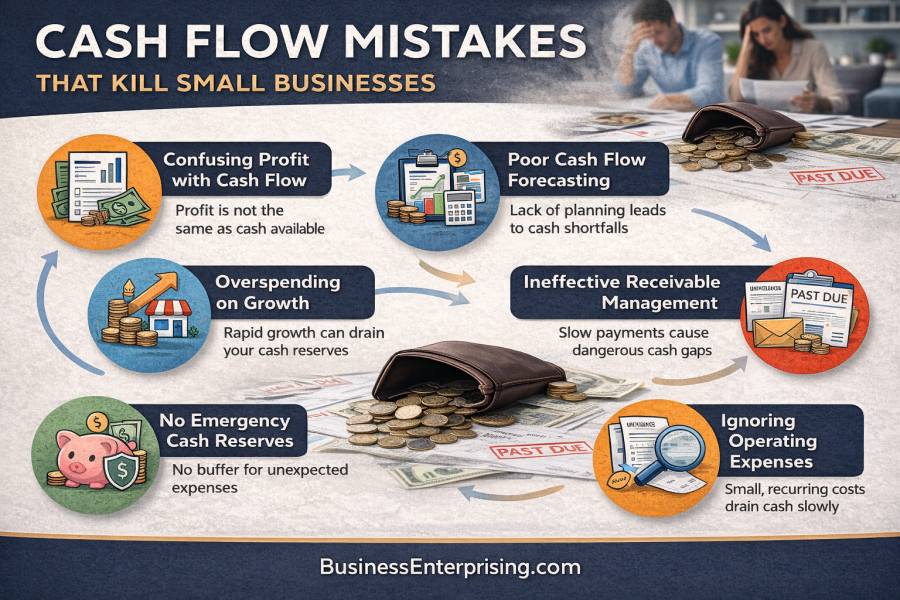
INEFFECTIVE ACCOUNTS RECEIVABLE MANAGEMENT
Many businesses struggle to collect payments on time. As a result, they face one of the most damaging cash flow mistakes. Ineffective accounts receivable management creates delays that limit available funds. When clients pay late, your operations suffer.
First, clear invoicing practices improve payment speed. When you send invoices promptly, you set expectations early. Therefore, clients understand when payment is due. This clarity reduces confusion and encourages faster responses.
However, many businesses delay invoicing after completing work. While this may seem minor, it slows cash inflow significantly. Because of this, your payment cycle extends unnecessarily. Consequently, your cash position weakens over time.
Moreover, lack of follow up creates further delays. Clients may overlook invoices without reminders. When you maintain consistent communication, you increase payment reliability. This effort helps you maintain steady cash flow.
At the same time, offering flexible payment options can support faster collection. Digital payments and online systems simplify the process. As a result, clients can pay quickly without friction. This convenience benefits both parties.
In addition, setting clear payment terms protects your business. You should define due dates, penalties, and expectations upfront. When clients understand these terms, compliance improves. Therefore, structured policies reduce late payments.
Ultimately, strong receivable management supports stability. When you collect payments efficiently, you maintain healthy cash levels. This consistency allows you to operate smoothly and plan ahead.
IGNORING OPERATING EXPENSES AND HIDDEN COSTS
Small expenses often appear harmless in isolation. However, they represent one of the most overlooked cash flow mistakes. When combined, these costs can drain your cash quietly. Therefore, you must monitor every expense carefully.
First, recurring costs add up over time. Subscriptions, software, and service fees may seem small individually. Yet, their total impact grows each month. As a result, your available cash decreases without clear warning.
Moreover, many businesses fail to review expenses regularly. Without audits, unnecessary costs remain in place. When you evaluate spending, you identify areas to reduce waste. This process improves your financial efficiency.
At the same time, hidden costs can appear in daily operations. Fees, penalties, and minor charges often go unnoticed. While each cost seems small, their combined effect becomes significant. Therefore, attention to detail matters greatly.
In addition, supplier pricing changes can increase expenses gradually. Without monitoring, you may continue paying higher rates. This oversight reduces your profit margins and cash reserves. As a result, your financial position weakens.
However, disciplined expense management creates stability. When you track costs closely, you gain control over spending. This awareness allows you to make informed decisions. Consequently, you protect your cash and improve performance.
Ultimately, every dollar matters in your business. Small savings can create meaningful improvements over time. By managing expenses actively, you strengthen your financial foundation.
LACK OF EMERGENCY CASH RESERVES
Unexpected events can disrupt your business at any time. Without preparation, these situations create severe cash flow mistakes. A lack of emergency reserves leaves you vulnerable to sudden expenses. Therefore, building a financial buffer is essential.
First, emergencies often occur without warning. Equipment failures, market changes, or delayed payments can impact your operations. When you lack reserves, these issues create immediate stress. As a result, your ability to respond becomes limited.
Moreover, relying on credit during emergencies increases risk. Loans and credit lines add financial pressure through interest and repayment terms. While they provide temporary relief, they also create long term obligations. Therefore, reserves offer a safer alternative.
At the same time, cash reserves provide flexibility. When you have funds available, you can handle challenges confidently. This stability allows you to maintain operations without disruption. Consequently, your business remains resilient.
In addition, reserves support better decision making. Without financial pressure, you can evaluate options carefully. This clarity helps you avoid rushed or costly choices. As a result, you protect your long term success. However, building reserves requires discipline. You must set aside a portion of revenue consistently. Over time, these contributions create a strong financial cushion. This habit strengthens your overall stability. Ultimately, emergency funds act as a safety net. They protect your business during uncertain times. By maintaining reserves, you secure your ability to operate and grow.

FAQ
| Question | Answer |
|---|---|
| What is the difference between profit and cash flow? | Profit represents earnings after expenses on paper, while cash flow shows actual money moving in and out of your business. You can report strong profits yet struggle to pay bills without available cash. Understanding this difference helps you make better financial decisions and avoid common pitfalls. |
| Why do small businesses struggle with cash flow? | Many small businesses lack proper planning and delay tracking financial activity. They often rely on sales numbers without monitoring expenses or payment timing. As a result, cash shortages develop unexpectedly, creating stress and limiting the ability to operate smoothly or invest in growth opportunities. |
| How can I improve my accounts receivable process? | You can improve collections by sending invoices immediately and setting clear payment terms. Regular follow ups encourage faster payments and reduce delays. Offering convenient payment options also helps clients respond quickly, which supports steady cash inflow and strengthens your financial stability. |
| How much cash reserve should a business have? | Most businesses benefit from maintaining at least three to six months of operating expenses in reserve. This buffer helps cover unexpected costs or revenue delays. A strong reserve gives you flexibility, reduces stress, and allows you to make decisions without financial pressure. |
| What are the most common cash flow mistakes small businesses make? | Common cash flow mistakes include poor forecasting, overspending, delayed invoicing, and ignoring small expenses. These issues often seem minor at first but compound over time. When you address them early, you protect your business and maintain consistent financial stability. |