
 Growth rarely happens by accident. Instead, it comes from clear decisions, focused execution, and consistent refinement. When you understand how to dominate your target market, you position your business for sustainable success. More importantly, you stop chasing every opportunity and start attracting the right customers.
First, you need clarity about who you serve and why they choose you. Then, you align every part of your business with that understanding. As a result, your marketing becomes more effective, and your message feels sharper.
Moreover, many businesses struggle because they spread their efforts too thin. They try to appeal to everyone, yet they connect with no one. Instead, you should narrow your focus and build authority within a defined group. Over time, this creates recognition and trust.
At the same time, you must stay aware of your competitive environment. Your market does not stand still, so your strategy cannot remain static. Therefore, you need to monitor trends, refine your positioning, and respond with intention.
Additionally, your ability to communicate value plays a major role in growth. If your audience does not understand your offer, they will move on quickly. So, you must present your message clearly and consistently.
Finally, long-term dominance comes from experience and relationships. When you deliver strong results and maintain engagement, customers return and refer others. As a result, your business grows with less resistance and greater momentum.
Defining and Segmenting Your Target Market with Precision
First, you need to define your target market with accuracy. Broad targeting often leads to weak results and wasted effort. Instead, you should focus on clear segments that share similar needs and behaviors.
Then, you can analyze demographics such as age, income, and location. At the same time, you should explore psychographics like values, interests, and lifestyle choices. As a result, you gain deeper insight into what motivates your audience.
Moreover, behavioral data helps you understand how customers interact with products and services. You can track buying patterns, engagement habits, and decision triggers. Therefore, you can tailor your approach with precision.
In addition, segmentation allows you to create more relevant messaging. When you speak directly to a specific group, your communication feels personal and engaging. Over time, this builds stronger connections and improves conversion rates.
Also, you should revisit your segments regularly. Markets shift, and customer preferences evolve. So, your targeting must adapt to remain effective.
When you apply these principles, you move closer to mastering how to dominate your target market. You stop guessing and start making informed decisions. As a result, your marketing becomes more efficient and impactful.
Conducting Competitive Analysis to Identify Market Gaps
First, you need to understand who your competitors are and how they operate. This includes both direct and indirect competitors within your space. Then, you can evaluate their offerings, pricing, and positioning.
Moreover, you should analyze their strengths and weaknesses carefully. For example, some competitors may excel in branding but lack customer service quality. Others may offer low prices but deliver inconsistent experiences.
At the same time, customer feedback provides valuable insight. Reviews, testimonials, and complaints reveal what customers appreciate and what frustrates them. Therefore, you can identify areas where your business can perform better.
In addition, you should examine how competitors communicate their value. Look at their messaging, tone, and channels. This helps you understand how they attract and retain customers.
Also, market gaps often appear where competitors fall short. These gaps create opportunities for differentiation and growth. When you address unmet needs, you position your business as a stronger alternative.
As you refine your approach, you strengthen your understanding of how to dominate your target market. You become more strategic and intentional in your decisions. Over time, this leads to better positioning and stronger results.
Developing a Unique Value Proposition That Commands Attention
First, your value proposition defines why customers should choose your business. It explains the benefit you deliver and how you stand apart. Without clarity, your audience may feel confused or disengaged.
Then, you should focus on specific outcomes your customers want. Think about the problems they face and the results they expect. As a result, your message becomes more relevant and compelling.
Moreover, your value proposition should remain simple and direct. Complex language often reduces clarity and weakens impact. Instead, you should communicate benefits in clear and concise terms.
At the same time, consistency matters across all channels. Your website, social media, and sales materials should reinforce the same message. This builds familiarity and trust over time.
In addition, testing different messages can improve performance. You can experiment with headlines, offers, and positioning. Therefore, you can identify what resonates most with your audience.
When you refine your value proposition, you strengthen your ability to show how to dominate your target market. You present a clear reason for customers to choose you. As a result, your brand becomes more memorable and persuasive.
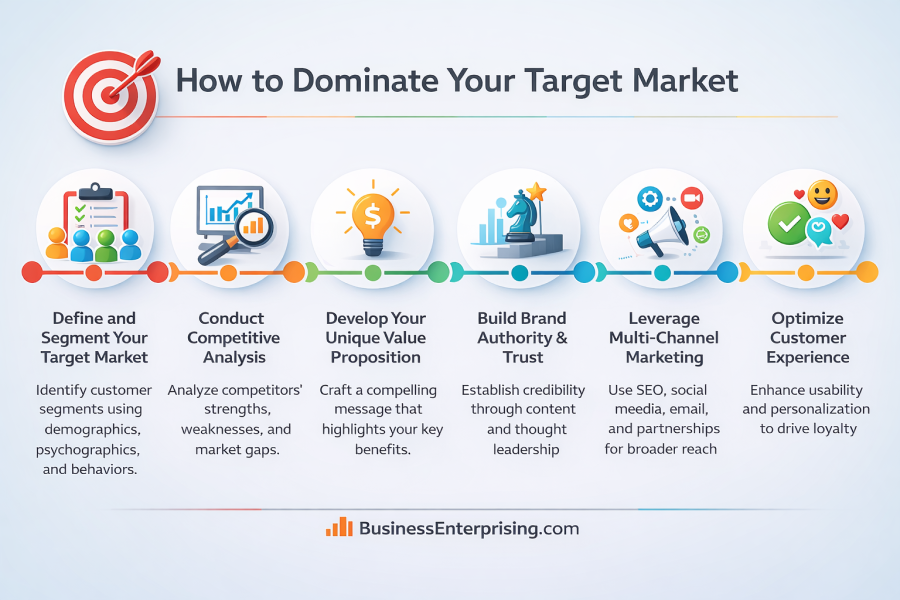
Building Brand Authority and Trust Within Your Niche
First, authority begins with consistent visibility and valuable content. When you share insights and expertise, your audience starts to recognize your knowledge. Over time, this builds credibility and trust.
Then, you should create content that addresses real customer questions and challenges. Blog posts, videos, and guides can educate and inform your audience. As a result, you position your brand as a reliable source.
Moreover, thought leadership strengthens your presence within your niche. You can share opinions, trends, and perspectives that demonstrate expertise. This helps differentiate your brand from competitors.
At the same time, social proof reinforces trust. Testimonials, case studies, and reviews show that others value your work. Therefore, potential customers feel more confident choosing your business.
In addition, consistency plays a key role in building authority. Your messaging, tone, and visuals should remain aligned across all platforms. This creates a cohesive and professional image.
When you focus on these elements, you improve your ability to show how to dominate your target market. You build relationships and earn trust over time. As a result, your brand becomes a preferred choice.
Leveraging Multi-Channel Marketing for Maximum Market Penetration
First, you should reach your audience across multiple channels. Relying on one platform limits your visibility and growth potential. Instead, you can combine several channels to expand your reach.
Then, search engine optimization helps you attract organic traffic. When your content ranks well, you gain consistent exposure over time. As a result, your business becomes easier to find.
Moreover, social media allows you to engage directly with your audience. You can share updates, respond to comments, and build relationships. This creates a more interactive brand experience.
At the same time, email marketing helps you maintain ongoing communication. You can share offers, updates, and valuable content. Therefore, you stay connected with your audience consistently.
In addition, partnerships can extend your reach even further. Collaborating with other brands introduces you to new audiences. This can accelerate growth and increase visibility.
When you integrate these channels effectively, you strengthen your approach to how to dominate your target market. You reach customers at multiple touchpoints. As a result, your influence and impact continue to grow.
Optimizing Customer Experience to Drive Loyalty and Referrals
First, customer experience shapes how people perceive your brand. Every interaction influences their overall impression. Therefore, you should focus on creating smooth and positive experiences.
Then, you can improve usability across your website and services. Clear navigation and simple processes reduce friction. As a result, customers can engage with ease.
Moreover, personalization enhances the experience further. When you tailor interactions to individual preferences, customers feel valued. This increases satisfaction and encourages repeat business.
At the same time, communication plays a key role. You should respond quickly and provide helpful information. This builds trust and strengthens relationships.
In addition, post-sale engagement helps maintain long-term connections. Follow-ups, support, and appreciation messages keep customers engaged. Therefore, they are more likely to return and refer others.
When you prioritize these elements, you reinforce your strategy for how to dominate your target market. You turn customers into advocates who support your growth. As a result, your business gains momentum and loyalty.

Q&A
| Question | Answer |
|---|---|
| What is the first step to dominating a target market? | The first step is defining your ideal customer with precision. You need clear demographic, psychographic, and behavioral data. This helps you focus your efforts and avoid wasting resources. When you understand your audience deeply, your messaging becomes more effective and your strategy gains direction. |
| How does competitive analysis improve market positioning? | Competitive analysis helps you understand what others offer and where they fall short. By studying strengths and weaknesses, you can identify opportunities to stand out. This allows you to position your business more effectively and meet customer needs that competitors may overlook. |
| Why is a value proposition important for growth? | A strong value proposition communicates why customers should choose you. It highlights benefits and differentiators in a clear way. When your message resonates, customers feel confident in their decision. This improves conversions and strengthens your overall brand positioning. |
| How do multiple marketing channels support business growth? | Using multiple channels increases your visibility and reach. You can connect with your audience through search, social media, email, and partnerships. This creates more opportunities for engagement. Over time, consistent exposure strengthens your brand and drives more qualified leads. |
| What role does customer experience play in long-term success? | Customer experience directly impacts loyalty and referrals. When you deliver smooth interactions and personalized service, customers feel valued. This encourages repeat business and positive word of mouth. As a result, you build a strong foundation for how to dominate your target market over time. |