 Starting an online store has never been more accessible, yet many new founders struggle with where to begin and what actually works. If you want to learn How to Start an Ecommerce Business, you need more than a checklist. You need a clear framework that helps you move from idea to revenue with confidence.
This guide walks you through every stage, from choosing a niche to building your website and driving traffic. Each section focuses on practical steps you can take immediately, not theory. By the end, you will understand how to validate your idea, set up your store, and attract your first customers without wasting time or money.
Table of Contents
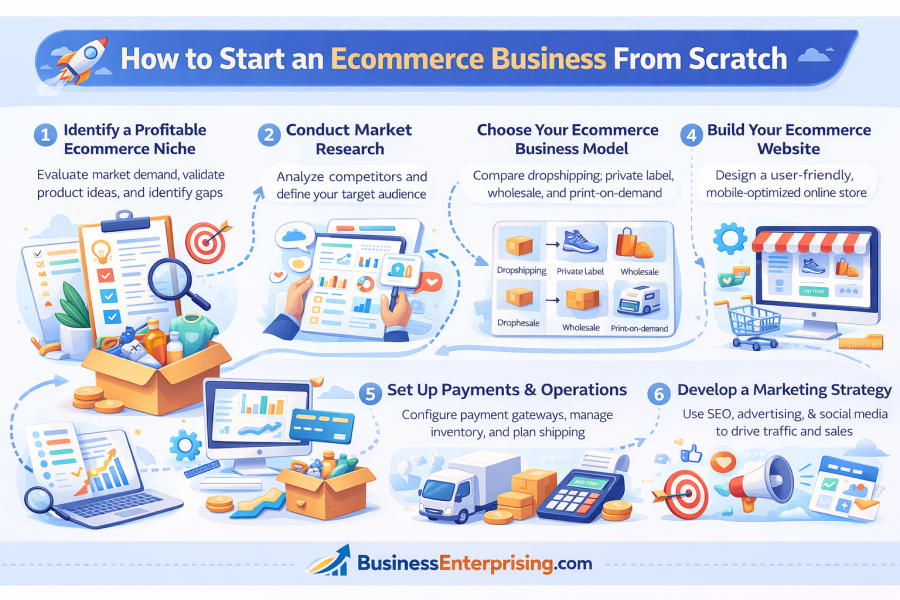
- Identifying a Profitable E-commerce Niche
- Conducting Market Research and Defining Your Target Audience
- Choosing the Right E-commerce Business Model
- Building and Designing Your E-commerce Website
- Setting Up Payment Processing, Shipping, and Operations
- Developing a Marketing Strategy to Drive Traffic and Sales
- FAQ
Identifying a Profitable E-commerce Niche
Evaluating Market Demand
Start by analyzing what people are actively searching for and buying. Use tools like Google Trends and keyword research platforms to identify consistent demand rather than short term spikes.
Look for niches where customers have a clear problem and are already spending money. Demand without purchasing intent rarely converts.
Validating Product Ideas
Validation reduces risk. Before investing heavily, test your idea with small campaigns, landing pages, or pre orders. If people are willing to click, sign up, or pay, you have real validation.
Finding Market Gaps
Study competitors closely. Look at product reviews, pricing, and customer complaints. Gaps often appear in areas like product quality, branding, or customer experience.
Conducting Market Research and Defining Your Target Audience
Competitor Analysis
Identify top competitors and analyze their strengths and weaknesses. Pay attention to pricing, messaging, and positioning. This helps you differentiate instead of copying.
Understanding Buyer Behavior
Focus on why customers buy, not just what they buy. Consider their motivations, objections, and decision triggers. This insight will shape your marketing strategy.
Creating Customer Profiles
Define your ideal customer clearly. Include demographics, interests, and buying behavior. The more specific you are, the easier it becomes to create effective messaging.
Choosing the Right E-commerce Business Model
Dropshipping vs Private Label
Dropshipping offers low startup costs and minimal inventory risk. Private label provides higher margins and brand control but requires upfront investment.
Wholesale and Bulk Purchasing
Buying in bulk can improve margins but increases financial risk. This model works best when demand is already proven.
Print on Demand
This model works well for custom products like apparel. It removes inventory risk while allowing brand customization.
Building and Designing Your E-commerce Website
Choosing the Right Platform
Select a platform that matches your technical ability and growth plans. Ease of use, scalability, and integrations should guide your decision.
Optimizing for Conversions
Your website should guide visitors toward purchase. Clear product pages, strong visuals, and simple navigation improve conversion rates.
Mobile and Speed Optimization
Most users shop on mobile devices. Fast loading pages and responsive design directly impact both user experience and search rankings.
Setting Up Payment Processing, Shipping, and Operations
Payment Gateways
Offer multiple payment options to reduce friction. Credit cards, digital wallets, and buy now pay later options can increase conversions.
Inventory Management
Even with dropshipping, tracking inventory levels is important. Overselling leads to poor customer experience and lost trust.
Shipping Strategy
Shipping costs and delivery times influence purchasing decisions. Transparent pricing and reliable fulfillment improve customer satisfaction.
Developing a Marketing Strategy to Drive Traffic and Sales
Search Engine Optimization
SEO drives long term traffic. Focus on keyword targeting, content creation, and technical optimization to build consistent visibility.
Paid Advertising
Paid ads generate immediate traffic. Platforms like Google Ads and social media allow precise targeting and quick testing.
Social Media and Influencer Marketing
Social platforms help build brand awareness and trust. Influencers can accelerate growth by reaching established audiences.
Email Marketing
Email remains one of the highest converting channels. Build a list early and use it to nurture leads and drive repeat purchases.
FAQ
How much money do you need to start an e-commerce business?
You can start with a few hundred dollars using dropshipping, but a branded store typically requires a few thousand for inventory and marketing.
How long does it take to become profitable?
Many stores take three to six months to gain traction. Profitability depends on product selection, marketing, and execution.
Do you need a business license?
Requirements vary by location, but most e-commerce businesses need some form of registration and tax compliance.
What is the best platform for beginners?
Platforms with simple interfaces and built in tools are often best for beginners. Ease of use matters more than advanced features early on.
Conclusion
Starting an e-commerce business from scratch requires more than a good idea. You need validation, a clear audience, the right business model, and a structured approach to marketing and operations.
When each step builds on the previous one, you reduce risk and increase your chances of success. The key is execution. Taking action consistently matters more than waiting for perfect conditions.
If you want expert guidance to launch and grow your e-commerce business faster, visit your consulting platform or schedule a consultation to build a strategy tailored to your goals.