

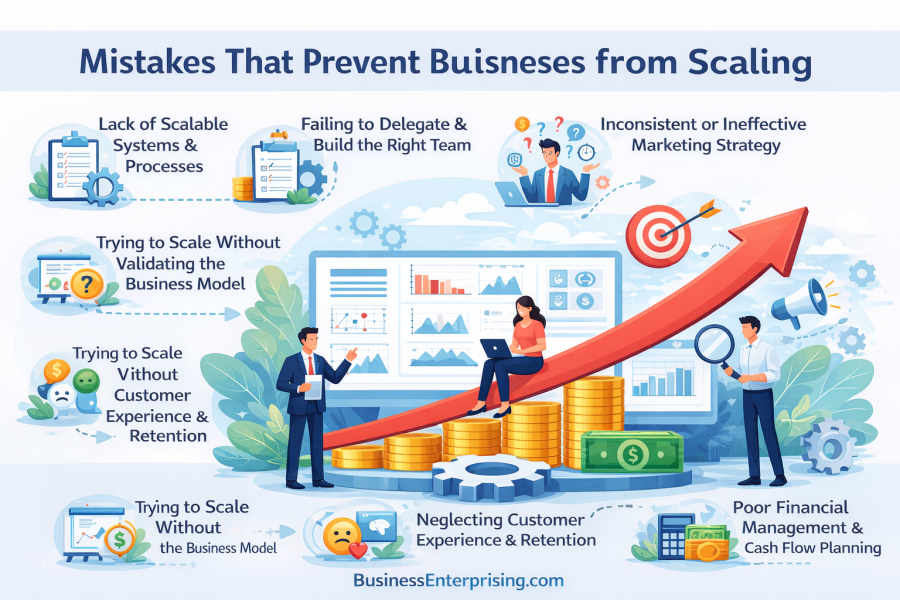
 Business growth sounds exciting, yet scaling often exposes hidden weaknesses. Many leaders focus on expansion without addressing core issues first. As a result, they encounter the same mistakes that prevent businesses from scaling, often without realizing it.
When your business grows, complexity increases across every function. For example, operations, marketing, and hiring all demand stronger coordination. However, many companies continue using methods that worked during early stages. Consequently, those methods begin to fail under higher demand.
At the same time, growth requires a shift in mindset. You must move from doing tasks to managing systems. Meanwhile, your role evolves from problem solver to decision maker. Without that shift, progress slows and frustration builds.
Furthermore, scaling demands consistency across your business. Customers expect reliable experiences, and teams need clear direction. Therefore, any gaps in structure or communication become more visible. Over time, these gaps limit your ability to grow.
In many cases, the biggest barriers are internal. You might believe external factors hold you back. However, most scaling issues come from avoidable decisions and habits. Once you identify them, you can take control and move forward with clarity.
Ultimately, understanding these challenges helps you grow with intention. As you refine your approach, you create a stronger foundation. Then, your business can expand in a way that feels stable and sustainable.
Lack of Scalable Systems and Processes
Many businesses start with flexible workflows that adapt quickly. However, those same workflows often create problems as demand increases. Without structure, tasks become inconsistent and difficult to manage. As a result, growth leads to confusion instead of progress.
When you rely on manual processes, your team spends time repeating basic tasks. Meanwhile, small errors begin to multiply across operations. Over time, these inefficiencies slow your ability to deliver results. Therefore, your growth becomes harder to sustain.
In many cases, leaders overlook the need for documented systems. Instead, they depend on memory or informal communication. Consequently, new team members struggle to learn and perform effectively. This gap creates delays and frustration across your organization.
At the same time, scalable systems create consistency. They allow your business to operate smoothly under pressure. For example, clear procedures help teams complete tasks with confidence. As a result, you reduce errors and improve performance.
You also gain better visibility into operations. When processes are defined, you can track results and identify issues quickly. Therefore, you can make informed decisions that support growth. Without this clarity, problems often remain hidden until they become serious.
Among the mistakes that prevent businesses from scaling, weak systems stand out. However, you can address this challenge by building repeatable processes. Once you do, your business becomes more efficient and easier to expand.
Failing to Delegate and Build the Right Team
As a business owner, you likely handled many roles early on. However, that approach limits growth over time. When you hold onto too many responsibilities, you create bottlenecks. Consequently, your business cannot move forward efficiently.
Delegation requires trust and clear expectations. Without those elements, team members struggle to perform. Meanwhile, you remain overwhelmed with daily tasks. This imbalance slows decision making and reduces overall productivity.
In many cases, leaders hesitate to hire or empower others. They worry about quality or losing control. However, this hesitation often leads to missed opportunities. As your workload increases, your ability to lead effectively declines.
Building the right team changes everything. When you hire people with the right skills, you create capacity for growth. At the same time, you free yourself to focus on strategy. This shift allows your business to operate at a higher level.
You also need clear roles and accountability. When everyone understands their responsibilities, work flows more smoothly. Therefore, your team can handle increased demand without constant oversight. This structure supports long term success.
Among the mistakes that prevent businesses from scaling, poor delegation stands out. However, once you build a strong team, your business gains momentum. Then, you can focus on guiding growth rather than managing every detail.
Inconsistent or Ineffective Marketing Strategy
Many businesses rely on occasional marketing efforts. However, inconsistency leads to unpredictable results. Without a clear strategy, your visibility rises and falls without warning. As a result, your growth becomes unstable.
When you lack a defined approach, you often chase short term tactics. For example, you may try new platforms without a clear goal. Meanwhile, your messaging becomes scattered and less effective. This confusion makes it harder to attract the right audience.
Consistency builds trust and awareness over time. When you show up regularly, your audience begins to recognize your brand. Therefore, your marketing efforts become more effective. Without this consistency, you miss valuable opportunities to connect.
A strong strategy also relies on data. When you track performance, you understand what works. Then, you can refine your approach and improve results. Without data, you rely on guesswork that limits your progress.
At the same time, your marketing should align with your business goals. Each effort should support growth in a clear way. When alignment is missing, resources get wasted. This disconnect slows your ability to scale effectively. Among the mistakes that prevent businesses from scaling, weak marketing plays a major role. However, a focused strategy creates steady growth. Over time, consistent efforts build momentum and drive better results.
Poor Financial Management and Cash Flow Planning
Growth requires careful financial planning. However, many businesses overlook this need. Without clear visibility into cash flow, decisions become risky. As a result, expansion can create unexpected financial strain.
When you fail to track expenses and revenue accurately, problems develop quickly. For example, you may underestimate costs during growth. Meanwhile, your available cash becomes limited. This situation can stall progress or create stress.
Cash flow management supports stability. When you understand your financial position, you make better decisions. Therefore, you can invest in growth with confidence. Without this understanding, you risk overextending your resources.
Planning also helps you prepare for changes. As your business grows, expenses often increase. At the same time, revenue may fluctuate. With a solid plan, you can handle these changes without disruption.
You also need to monitor key financial indicators. These metrics provide insight into performance and trends. When you review them regularly, you stay informed. This awareness allows you to adjust your strategy when needed.
Among the mistakes that prevent businesses from scaling, poor financial oversight creates major setbacks. However, strong planning builds a stable foundation. Once you gain control of your finances, growth becomes more manageable and predictable.
Neglecting Customer Experience and Retention
Many businesses focus heavily on acquiring new customers. However, they often overlook the importance of retention. When customers leave quickly, growth becomes difficult to maintain. As a result, your efforts produce limited long term value.
Customer experience shapes how people view your business. When interactions feel smooth and positive, trust increases. Therefore, customers are more likely to return. Without this consistency, loyalty begins to decline.
Retention also improves profitability. Existing customers often spend more over time. At the same time, they refer others to your business. This organic growth supports scaling in a sustainable way.
You need to understand your customers’ needs and expectations. When you gather feedback, you gain valuable insights. Then, you can improve your products and services. This process strengthens your relationship with your audience.
Consistency plays a key role in retention. When customers know what to expect, they feel confident in your brand. Therefore, they continue to engage with your business. Without this reliability, they may look elsewhere.
Among the mistakes that prevent businesses from scaling, neglecting retention creates ongoing challenges. However, focusing on customer experience builds lasting growth. Over time, strong relationships drive consistent success.
Trying to Scale Without Validating the Business Model
Growth often feels exciting, so many businesses rush to expand. However, scaling without validation creates serious risks. When your model lacks proven demand, growth amplifies existing issues. As a result, problems become harder to fix.
Validation confirms that your product meets real needs. When customers respond positively, you gain confidence in your direction. Therefore, you can scale with a stronger foundation. Without validation, your strategy remains uncertain.
Pricing also plays a key role in validation. When your pricing aligns with value, customers are willing to pay. At the same time, your margins support growth. Without this balance, expansion becomes difficult to sustain.
You also need to test your processes before scaling. When systems work on a small scale, they can support growth more effectively. Therefore, testing helps you identify and fix weaknesses early.
Market feedback provides valuable direction. When you listen to your customers, you refine your approach. This ongoing improvement strengthens your business model. Without feedback, you may miss important signals.
Among the mistakes that prevent businesses from scaling, skipping validation leads to avoidable setbacks. However, a proven model creates confidence and clarity. Once validated, your business can grow in a more stable and controlled way.

FAQ
| Question | Answer |
|---|---|
| Why do businesses struggle to scale successfully? | Many businesses struggle because they rely on early stage habits that do not support growth. These include weak systems, unclear roles, and inconsistent marketing. As complexity increases, these gaps become more visible. Addressing internal issues early helps create a stronger path for sustainable expansion. |
| How important are systems and processes for scaling? | Systems and processes provide structure and consistency as your business grows. They reduce errors, improve efficiency, and help teams perform reliably. Without clear systems, operations become disorganized. Over time, this lack of structure slows progress and creates unnecessary challenges during expansion. |
| What role does leadership play in scaling a business? | Leadership plays a major role because it sets direction and builds the team. As your business grows, your focus must shift toward strategy and delegation. Strong leaders empower others and create accountability. This approach allows the business to operate smoothly while handling increased demand. |
| How can marketing impact business growth? | Marketing drives visibility and customer acquisition, which are essential for growth. A consistent strategy builds awareness and trust over time. When marketing lacks direction, results become unpredictable. By focusing on data and clear goals, businesses can create steady momentum and improve long term performance. |
| What are common mistakes that prevent businesses from scaling? | Common mistakes include weak systems, poor delegation, inconsistent marketing, and lack of financial planning. These mistakes that prevent businesses from scaling often develop during early growth stages. When left unaddressed, they limit progress. Recognizing and correcting them helps businesses grow more effectively and sustainably. |