

 Starting a business feels exciting, yet it can quickly become overwhelming without clear direction. A structured startup checklist helps you stay focused and move forward with confidence. It also keeps you from missing key steps that impact long term growth. As a result, you can build your business with a stronger foundation from the beginning.
First, you need clarity around your idea and the value you plan to offer. Then, you must turn that idea into a workable plan that guides your daily decisions. At the same time, you should understand the legal and financial steps required to operate properly. Without this structure, many first time founders waste time and money.
Moreover, early planning allows you to spot risks before they become serious problems. For example, weak demand or poor pricing can limit your growth from the start. By addressing these issues early, you give your business a better chance to succeed. Therefore, preparation becomes a key driver of progress.
Next, you will need to think about your brand and how people will find you online. A clear message and professional presence build trust with your audience. In addition, strong systems help you manage operations as your business grows. This combination supports both stability and expansion.
Ultimately, your goal is to move from idea to execution with confidence and control. With the right approach, you can avoid common mistakes and build momentum faster. This guide walks you through the essential steps so you can take action with clarity and purpose.
Validating Your Business Idea Before Launch
Before you invest time and money, you need to confirm that your idea solves a real problem. Therefore, you should focus on understanding your target audience and their needs. When you validate demand early, you reduce the risk of building something people ignore.
First, talk directly to potential customers and listen to their feedback. Then, ask clear questions about their challenges and current solutions. As you gather insights, patterns will start to appear. These patterns help you refine your concept and improve your offer.
Next, test your idea with a simple version of your product or service. For example, you can create a basic landing page or offer a pilot service. This approach lets you measure real interest before committing resources. As a result, you gain valuable data with minimal risk.
At the same time, research your competitors and analyze their positioning. You should identify what they do well and where they fall short. Then, use that information to shape your unique value. This step helps you stand out in a crowded market.
A strong startup checklist includes validation as an early priority. Without it, you rely on assumptions instead of evidence. Therefore, take the time to confirm demand before moving forward. When you validate properly, you build your business on a solid foundation.
Creating a Clear Business Plan and Revenue Model
Once your idea shows promise, you need a clear plan to guide your actions. A well structured business plan helps you define your direction and stay aligned. It also gives you a framework for making informed decisions as you grow.
First, outline your target market and describe your ideal customer in detail. Then, clarify the problem you solve and how your solution adds value. This clarity helps you communicate your offer effectively. As a result, your messaging becomes more focused and persuasive.
Next, define how your business will generate revenue. You should choose a pricing model that reflects your value and market conditions. At the same time, consider your cost structure and profit margins. These factors determine your financial sustainability.
Moreover, map out your sales process and customer acquisition strategy. You need to understand how leads will find you and convert into customers. By planning this process early, you avoid confusion later. Therefore, your growth efforts become more efficient.
A startup checklist should always include a clear plan and revenue model. Without these elements, your business lacks direction and consistency. When you document your strategy, you create a roadmap for execution. This roadmap supports steady progress and long term success.
Handling Legal Structure, Registration, and Compliance
As you move forward, you must set up your business properly from a legal standpoint. This step protects you and supports smooth operations over time. Therefore, you should choose a business structure that fits your goals and risk tolerance.
First, decide between common structures such as sole proprietorship, partnership, or limited liability company. Each option has different tax and liability implications. As a result, your choice will affect how you operate and report income. You should review these factors carefully before deciding.
Next, register your business name and obtain any required licenses. This process makes your business official and compliant with local regulations. At the same time, you should secure any necessary permits related to your industry. These steps help you avoid legal issues later.
Moreover, set up proper record keeping and understand your tax responsibilities. You need to track income, expenses, and filings from the beginning. By staying organized, you reduce stress during tax season. Therefore, good habits early make a significant difference.
A complete startup checklist always includes legal and compliance steps. Skipping these areas can lead to costly problems down the road. When you handle these details early, you create a stable structure for your business. This stability supports growth and peace of mind.
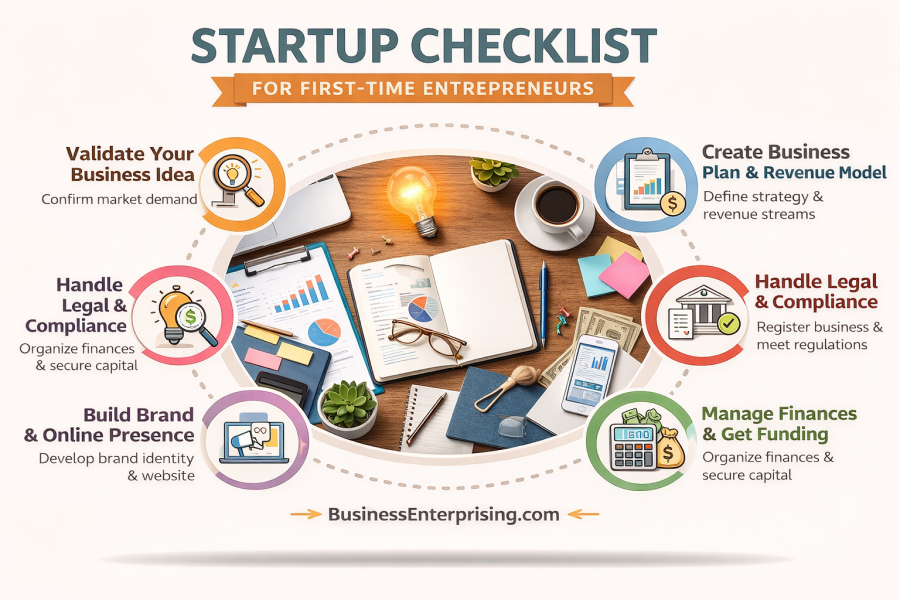
Setting Up Finances and Securing Startup Capital
Financial planning plays a key role in your business success from day one. You need a clear understanding of your costs, revenue goals, and cash flow. Therefore, you should build a financial system that supports smart decision making.
First, open a dedicated business bank account to separate personal and business finances. This separation keeps your records clean and easy to manage. At the same time, it helps you track performance more accurately. As a result, you gain better control over your money.
Next, create a simple budget that outlines expected expenses and income. You should include fixed costs, variable costs, and growth investments. By planning ahead, you avoid surprises that can disrupt your operations. Therefore, budgeting becomes a practical tool for stability.
Moreover, explore different funding options that fit your situation. These may include personal savings, loans, or outside investors. Each option has advantages and tradeoffs you should consider carefully. Then, choose the path that aligns with your goals.
A strong startup checklist includes financial setup and funding strategies. Without proper planning, cash flow issues can slow your progress. When you manage your finances well, you create a foundation for consistent growth. This approach helps you move forward with confidence.
Building Your Brand and Online Presence
Your brand shapes how people perceive your business from the first interaction. Therefore, you should define a clear identity that reflects your values and message. A strong brand builds trust and makes your business more memorable.
First, choose a business name, logo, and visual style that align with your target audience. Then, create messaging that explains what you offer and why it matters. This consistency helps people understand your business quickly. As a result, your communication becomes more effective.
Next, build a professional website that presents your services clearly. You should include key information, contact details, and calls to action. At the same time, make sure your site works well on mobile devices. This improves the user experience and supports conversions.
Moreover, establish a presence on relevant digital platforms where your audience spends time. You can share content, engage with users, and build relationships over time. By staying active, you increase visibility and credibility. Therefore, consistency in your efforts matters.
A startup checklist should always include branding and online presence. Without these elements, it becomes harder to attract and retain customers. When you invest in your brand early, you create a strong first impression. This impression supports long term growth.
Establishing Systems, Tools, and Operations
As your business grows, you need systems that keep everything running smoothly. Clear processes help you stay organized and reduce errors. Therefore, you should set up tools that support your daily operations from the start.
First, define workflows for key tasks such as customer communication and order fulfillment. Then, document these processes so you can follow them consistently. This approach saves time and improves efficiency. As a result, you can focus on growth activities.
Next, choose tools that support your business needs without adding unnecessary complexity. You may need software for accounting, customer management, or communication. By selecting the right tools, you simplify your operations. Therefore, your team can work more effectively.
Moreover, create a system for tracking performance and measuring results. You should monitor key metrics that reflect your goals. This data helps you identify areas for improvement. Then, you can adjust your strategy based on real insights.
A well designed startup checklist includes systems and operational planning. Without structure, your business can become difficult to manage. When you build strong systems early, you create a scalable foundation. This foundation allows your business to grow with greater control.
FAQ
| Question | Answer |
|---|---|
| What is the first step when starting a business? | The first step is validating your business idea. You should confirm there is real demand and a clear problem to solve. By gathering feedback early, you reduce risk and improve your concept before investing time and money. |
| Why is a business plan important for startups? | A business plan gives you direction and helps you stay focused. It outlines your target market, revenue model, and strategy. With a clear plan, you can make better decisions and communicate your vision more effectively to partners or investors. |
| How much money do I need to start a business? | The amount depends on your industry and business model. You should calculate your startup costs, operating expenses, and cash flow needs. Planning your finances early helps you avoid shortfalls and manage resources more effectively as your business grows. |
| Do I need a website for my startup? | Yes, a website builds credibility and gives customers a place to learn about your business. It also supports marketing and lead generation. A simple, professional site can help you attract and convert customers from the beginning. |
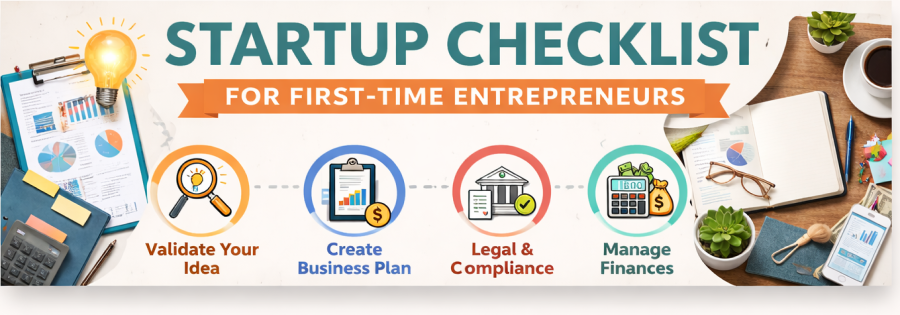
| What should be included in a startup checklist? | A startup checklist should cover idea validation, planning, legal setup, finances, branding, and systems. By following a structured startup checklist, you stay organized and avoid missing important steps that impact your long term success. |