 You may wonder how to find funding without giving away ownership or control of your startup. Many founders face this challenge early and must act with limited resources. However, you can access several funding paths that do not involve investors. These options allow you to build your company on your own terms. As a result, you maintain full decision-making power from the start.
At the same time, you need to understand how each funding method works before you move forward. For example, some options require strong credit, while others demand proof of revenue. Meanwhile, other sources focus on your business model and market potential. Therefore, you must evaluate each path based on your current stage and goals.
In addition, many founders overlook how discipline impacts funding success. When you manage cash carefully, you extend your runway and reduce risk. As a result, you gain more flexibility in choosing the right funding source. You also position your business for stronger long-term performance.
Furthermore, you should approach funding as a strategic process, not a one-time event. As your company grows, your funding needs will change. Therefore, you must stay adaptable and open to multiple approaches. By doing so, you increase your chances of building a sustainable business.
Understanding Non-Dilutive Funding and Why It Matters
Non-dilutive funding allows you to raise capital without giving away ownership in your business. As a result, you retain full control over decisions and future growth. This approach appeals to founders who want long-term independence. Therefore, many startups actively pursue these funding options early.
When you learn how to find funding through non-dilutive sources, you open new opportunities for growth. For example, grants, loans, and revenue-based financing offer different advantages. Meanwhile, each option comes with specific requirements you must meet. Therefore, you should assess your eligibility before applying.
In addition, non-dilutive funding often requires strong documentation and planning. You must present clear financials, business models, and growth projections. As a result, you develop stronger operational discipline from the beginning. This preparation also improves your chances of securing funding.
However, you should recognize that non-dilutive funding can limit speed. Since you avoid equity investment, you may access smaller amounts of capital. Therefore, your growth may progress more gradually. Still, many founders prefer this trade-off to maintain control.
Furthermore, you must consider repayment obligations for certain funding types. Loans and revenue-based financing require consistent cash flow. As a result, you need reliable revenue or a clear path to profitability. This requirement encourages sustainable business practices.
Ultimately, non-dilutive funding offers a powerful way to grow while protecting ownership. When used strategically, it supports long-term stability and independence.
Bootstrapping Your Startup from Day One
Bootstrapping allows you to fund your business using your own resources and early revenue. As a result, you maintain full ownership and avoid outside influence. Many founders choose this path to build strong financial habits. Therefore, bootstrapping often shapes disciplined entrepreneurs.
When you explore how to find funding through bootstrapping, you rely on internal cash flow. For example, you may use personal savings or reinvest profits into the business. Meanwhile, you must control expenses and prioritize essential costs. This approach helps you maximize every dollar.
In addition, bootstrapping forces you to validate your business model quickly. You must generate revenue early to sustain operations. As a result, you focus on delivering value to customers immediately. This process strengthens your market positioning.
However, you should understand that bootstrapping can limit rapid growth. Since resources remain tight, scaling may take more time. Therefore, you must plan carefully and set realistic expectations. Growth may be steady rather than fast.
Furthermore, bootstrapping encourages creative problem solving. You learn to operate efficiently and make strategic decisions. As a result, you build a resilient business foundation. This mindset often leads to long-term success.
Ultimately, bootstrapping offers a practical path for founders who value control and discipline. When executed well, it supports sustainable growth and strong fundamentals.
Leveraging Government Grants and Public Funding Programs
Government grants provide funding that does not require repayment or equity exchange. As a result, they attract many startups seeking financial support. These programs exist at federal, state, and local levels. Therefore, you have multiple opportunities to explore.
When you consider how to find funding through grants, you must meet specific eligibility criteria. For example, some programs target certain industries or demographics. Meanwhile, others focus on innovation or community impact. Therefore, you should research programs that align with your business.
In addition, grant applications often require detailed documentation and clear proposals. You must explain your business model, goals, and expected outcomes. As a result, you develop a stronger understanding of your operations. This preparation benefits your overall strategy.
However, grant funding can be competitive and time intensive. Many applicants compete for limited resources. Therefore, you must submit well-prepared applications to stand out. Strong planning increases your chances of success.
Furthermore, you should track deadlines and maintain organized records. Missing key details can reduce your chances of approval. As a result, attention to detail becomes essential. This process builds strong administrative habits.
Ultimately, grants offer valuable funding without ownership loss. When you approach them strategically, they can support early-stage growth and expansion.
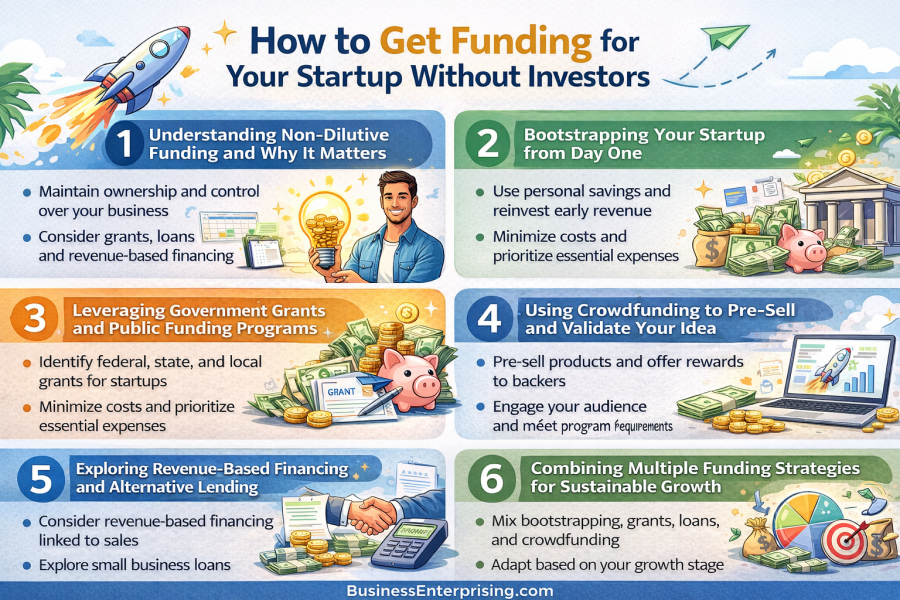
Using Crowdfunding to Pre-Sell and Validate Your Idea
Crowdfunding allows you to raise money directly from customers through online platforms. As a result, you can generate capital while testing market demand. This method combines funding with product validation. Therefore, many startups use it early.
When you study how to find funding through crowdfunding, you focus on audience engagement. For example, you present your product and offer rewards or pre-orders. Meanwhile, you build interest through marketing and storytelling. This approach helps attract backers.
In addition, crowdfunding provides immediate feedback from potential customers. You can measure interest based on campaign performance. As a result, you gain insights into your product’s appeal. This data helps refine your offering.
However, crowdfunding requires strong preparation and promotion. You must create compelling content and communicate clearly. Therefore, you need a clear strategy before launching. Without planning, campaigns may struggle.
Furthermore, successful campaigns often rely on early momentum. You should engage your network before going live. As a result, you build initial traction quickly. This momentum can influence broader participation.
Ultimately, crowdfunding offers a practical way to fund and validate your idea. When executed effectively, it connects you directly with your target market.
Exploring Revenue-Based Financing and Alternative Lending
Revenue-based financing allows you to access capital with repayments tied to your income. As a result, payments adjust based on business performance. This structure offers flexibility compared to fixed loan payments. Therefore, many startups find it appealing.
When you evaluate how to find funding through alternative lending, you explore various options. For example, fintech lenders offer fast approvals and streamlined processes. Meanwhile, traditional loans provide larger amounts with structured terms. Each option serves different needs.
In addition, alternative lenders often assess revenue and cash flow instead of credit alone. This approach benefits startups with strong sales. As a result, you may qualify even with limited credit history. This expands your funding options.
However, you should review terms carefully before committing. Some options include higher fees or shorter repayment periods. Therefore, you must understand the full cost of funding. Clear evaluation prevents future challenges.
Furthermore, you need consistent revenue to support repayment obligations. This requirement encourages stable business operations. As a result, you focus on maintaining reliable income streams. Strong revenue supports long-term success.
Ultimately, alternative lending provides flexible funding for growing businesses. When used wisely, it supports expansion without sacrificing ownership.
Combining Multiple Funding Strategies for Sustainable Growth
Many successful founders combine several funding methods to support different growth stages. As a result, they reduce reliance on a single source. This approach increases flexibility and stability. Therefore, it often leads to stronger outcomes.
When you learn how to find funding through a hybrid strategy, you match funding to your needs. For example, you may bootstrap early and use grants for expansion. Meanwhile, you can add lending options as revenue grows. This layered approach supports steady progress.
In addition, combining strategies allows you to balance risk and opportunity. You can maintain control while accessing needed capital. As a result, you create a more adaptable business model. This flexibility supports long-term growth.
However, managing multiple funding sources requires careful planning. You must track obligations and align them with cash flow. Therefore, organization becomes essential. Clear systems help you stay on track.
Furthermore, you should regularly review your funding mix. As your business evolves, your needs will change. As a result, you may shift strategies over time. This adaptability strengthens your position.
Ultimately, combining funding methods offers a balanced path to growth. When executed thoughtfully, it supports sustainability and long-term success.
Conclusion
You now understand several ways to fund your startup without relying on investors. Each method offers different benefits and challenges. Therefore, you should evaluate your options carefully. Your choices will shape your business direction.
When you focus on how to find funding, you gain more control over your future. You can select strategies that align with your goals and values. As a result, you build a business that reflects your vision. This control supports long-term growth.
In addition, you should remain flexible as your business evolves. Funding needs will change over time. Therefore, you must adjust your approach when necessary. This adaptability strengthens your position.
Furthermore, you can combine multiple strategies to support different stages. This approach helps balance risk and opportunity. As a result, you create a stable and scalable business. Strong planning leads to better outcomes.
Ultimately, your ability to secure funding depends on preparation and execution. When you stay disciplined and informed, you improve your chances of success.