
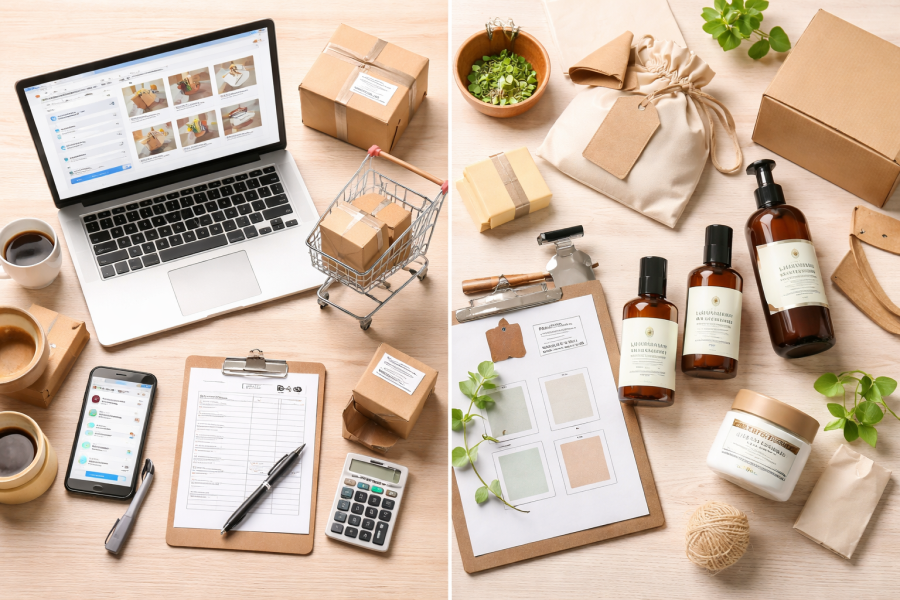
 When you explore ecommerce models, Dropshipping vs Private Label often becomes a central question. You want a model that supports profit, control, and long-term growth. While both options attract new entrepreneurs, they operate in very different ways. As a result, your decision affects how you build your business.
First, you should understand how each model works in practice. Dropshipping allows you to sell products without holding inventory. Instead, a supplier ships items directly to your customers. Meanwhile, private label requires you to source products and brand them as your own. Therefore, you take on more responsibility, yet gain more control.
Next, you must consider your financial position and risk tolerance. Dropshipping offers a low-cost entry, which appeals to beginners. On the other hand, private label demands upfront investment for inventory and branding. However, that investment can support stronger margins over time.
Also, you should think about how you want customers to perceive your brand. Dropshipping often limits your ability to stand out. In contrast, private label lets you shape your product and messaging. As a result, you can build a recognizable identity.
Finally, you need to evaluate long-term scalability. While both models can grow, they follow different paths. Dropshipping focuses on speed and testing. Meanwhile, private label emphasizes brand equity and repeat business. By understanding these differences, you can make a smarter decision. Your goals, budget, and timeline will guide your choice.
Understanding the Core Differences Between Dropshipping and Private Label
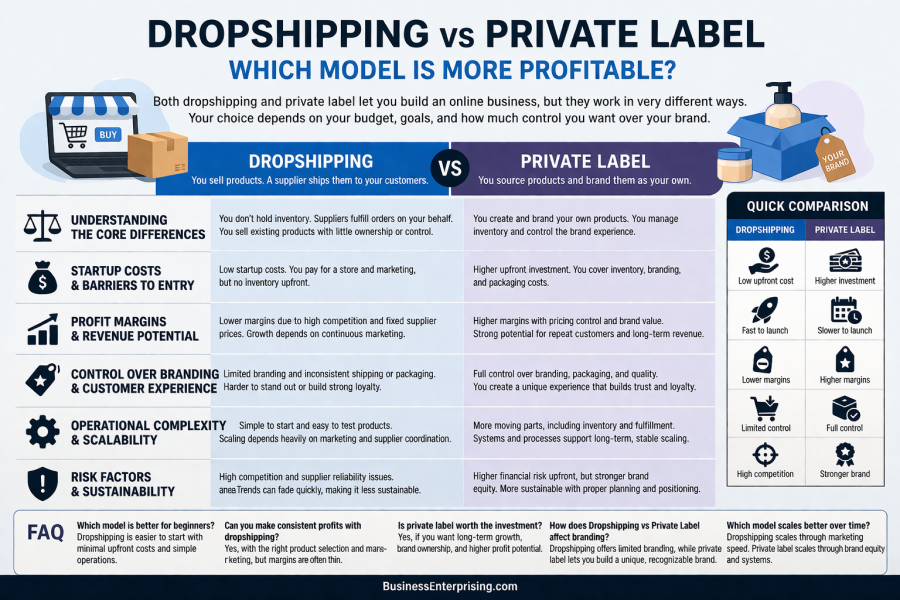
When comparing Dropshipping vs Private Label, you need a clear understanding of how each model functions. Both models sell products online, yet they differ in ownership, fulfillment, and control. Therefore, your business structure changes based on your choice.
First, dropshipping removes the need to hold inventory. You list products on your website, then a supplier fulfills each order. As a result, you avoid storage and shipping responsibilities. However, you rely heavily on third-party suppliers for quality and delivery.
Meanwhile, private label requires you to source products from manufacturers. You then brand those products under your business name. Therefore, you own the brand and control how products appear to customers. This approach allows you to shape your market position.
Also, fulfillment differs between the two models. Dropshipping suppliers ship products directly to customers. In contrast, private label businesses often manage inventory or use fulfillment centers. As a result, you gain more control over packaging and delivery experience.
Next, ownership plays a major role in long-term strategy. Dropshipping focuses on selling existing products with minimal customization. However, private label builds a brand that customers can recognize and trust. Therefore, you create a business asset over time.
Additionally, product differentiation varies between models. Dropshipping offers limited customization, which can lead to similar stores competing on price. On the other hand, private label allows you to modify products and branding. As a result, you can stand out in crowded markets. Ultimately, your decision depends on your goals. If you want speed and low commitment, dropshipping may suit you. However, if you want control and brand ownership, private label offers a stronger foundation.
Startup Costs and Financial Barriers to Entry
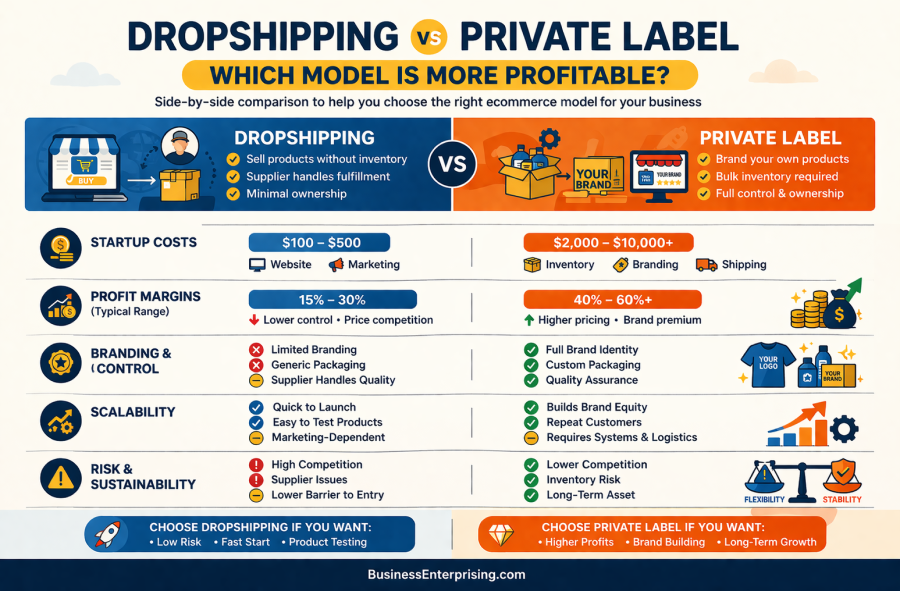
When evaluating Dropshipping vs Private Label, startup costs play a major role in your decision. Your available budget will influence how quickly you can launch and scale your business. Therefore, understanding these financial differences helps you plan effectively.
First, dropshipping offers a low-cost entry point. You can launch a store without purchasing inventory upfront. As a result, you reduce financial risk during the early stages. However, you still need to invest in website development and marketing.
Next, marketing expenses often drive early success. Since dropshipping products are widely available, you must rely on advertising to attract customers. Therefore, you may spend more on paid traffic to stay competitive. Over time, these costs can add up quickly.
Meanwhile, private label requires a larger initial investment. You must purchase inventory, design packaging, and develop branding assets. As a result, your upfront costs increase significantly. However, this investment gives you more control over your product.
Also, branding costs play a key role in private label success. You need logos, packaging design, and product differentiation. Therefore, you invest in building a recognizable identity. This effort supports higher pricing and stronger customer loyalty.
Additionally, inventory management affects your cash flow. Private label requires you to hold stock, which ties up capital. However, it also allows you to manage supply and demand more effectively. As a result, you reduce dependency on external suppliers. Ultimately, your financial situation should guide your choice. If you want a low-cost entry, dropshipping provides flexibility. However, if you can invest upfront, private label offers greater long-term potential.
Profit Margins and Long-Term Revenue Potential
When analyzing Dropshipping vs Private Label, profit margins become a key factor in your decision. You want a model that supports sustainable income and long-term growth. Therefore, understanding how each model generates profit is essential.
First, dropshipping typically offers lower profit margins. Since multiple sellers offer the same products, competition drives prices down. As a result, you often compete on pricing and marketing efficiency. This dynamic can limit your earning potential over time.
Next, supplier pricing affects your margins. In dropshipping, suppliers set product costs and shipping fees. Therefore, you have limited control over your expenses. This constraint can make it harder to increase profitability.
Meanwhile, private label provides higher margin potential. You source products at wholesale prices, then sell them under your brand. As a result, you control pricing and positioning. This flexibility allows you to increase profit per sale.
Also, branding plays a major role in revenue growth. Private label products can command higher prices due to perceived value. Therefore, customers are more willing to pay for a trusted brand. This advantage supports long-term profitability.
Additionally, repeat customers improve revenue stability. Dropshipping often struggles with customer retention due to lack of differentiation. However, private label builds brand loyalty over time. As a result, you generate consistent sales from returning buyers.
Finally, scaling revenue differs between models. Dropshipping relies heavily on continuous marketing spend. In contrast, private label benefits from brand recognition and organic growth. Therefore, you can reduce reliance on paid traffic over time. Overall, private label offers stronger profit potential, while dropshipping focuses on quick entry and testing.
Control Over Branding, Customer Experience, and Product Quality
When comparing Dropshipping vs Private Label, control over branding and customer experience plays a major role. You want to create a business that customers trust and remember. Therefore, control becomes a key factor in your decision.
First, dropshipping limits your ability to shape your brand. You sell products that many other stores also offer. As a result, your store may look similar to competitors. This similarity makes it harder to stand out.
Next, customer experience depends heavily on suppliers. Since suppliers handle fulfillment, you have limited control over packaging and shipping speed. Therefore, delays or quality issues can affect your reputation.
Meanwhile, private label gives you full control over branding. You design your packaging, messaging, and product presentation. As a result, you create a consistent and memorable customer experience. This control strengthens your brand identity.
Also, product quality becomes more manageable with private label. You can select manufacturers and set quality standards. Therefore, you reduce the risk of inconsistent products. This consistency builds customer trust over time.
Additionally, branding allows you to differentiate your products. Private label enables you to create unique features and positioning. As a result, you attract customers who value your brand. This approach supports higher pricing and loyalty.
Finally, customer relationships improve with brand control. Dropshipping often focuses on one-time sales. However, private label encourages repeat purchases and engagement. Therefore, you build a stronger connection with your audience. In the long run, control over branding and experience supports business growth and stability.
Operational Complexity and Scalability
When evaluating Dropshipping vs Private Label, operational complexity influences how you manage your business. You need a model that fits your skills, time, and growth plans. Therefore, understanding daily operations helps you choose wisely.
First, dropshipping offers a simple operational structure. You focus on marketing and customer acquisition. Meanwhile, suppliers handle inventory and shipping. As a result, you can run your business with fewer moving parts.
Next, scaling dropshipping depends on marketing performance. You increase sales by driving more traffic to your store. Therefore, your growth relies heavily on advertising and optimization. This approach can scale quickly with the right strategy.
However, supplier management can become challenging over time. You may work with multiple suppliers to expand your product range. As a result, coordination and consistency can become difficult. This complexity may affect customer satisfaction.
Meanwhile, private label involves more operational responsibility. You manage inventory, suppliers, and fulfillment processes. Therefore, your workload increases as your business grows. However, this control allows for better system development.
Also, scalability in private label focuses on systems and processes. You can streamline operations through fulfillment centers and automation. As a result, your business becomes more efficient over time. This structure supports long-term expansion.
Additionally, supply chain control improves scalability. Private label allows you to plan inventory and production cycles. Therefore, you reduce disruptions and maintain consistent availability. This reliability supports customer trust. Ultimately, dropshipping offers simplicity and speed, while private label requires more effort but supports structured growth.
Risk Factors and Sustainability in a Competitive Market
When analyzing Dropshipping vs Private Label, risk and sustainability shape your long-term success. You need a model that can withstand competition and market changes. Therefore, understanding potential risks helps you plan effectively.
First, dropshipping faces high competition levels. Many sellers use the same suppliers and products. As a result, markets can become saturated quickly. This saturation often leads to price competition and reduced margins.
Next, supplier reliability creates ongoing risk. Since you depend on third-party fulfillment, delays or errors can occur. Therefore, your customer experience may suffer. This lack of control can impact your reputation.
Meanwhile, private label involves financial risk due to upfront investment. You must purchase inventory before making sales. As a result, unsold products can affect your cash flow. However, this risk comes with greater control.
Also, brand building supports long-term sustainability. Private label allows you to create a recognizable identity. Therefore, you reduce reliance on price competition. This advantage helps you maintain stable margins.
Additionally, market positioning plays a key role in risk management. Dropshipping often competes in crowded niches. However, private label allows you to target specific audiences. As a result, you can build a loyal customer base.
Finally, adaptability affects long-term success. Dropshipping allows quick product testing and changes. Meanwhile, private label requires more planning and commitment. Therefore, each model offers different approaches to managing risk. Overall, private label supports long-term stability, while dropshipping offers flexibility and speed.
FAQ
Which model is better for beginners?
Dropshipping often suits beginners because it requires less upfront investment and simpler operations. You can test products and markets quickly. However, you should still plan your marketing carefully, since competition can be high and profit margins are often lower compared to branded products.
Can you make consistent profits with dropshipping?
Yes, you can generate profits with dropshipping, especially with strong marketing and product selection. However, consistency may vary due to competition and supplier dependence. Over time, many sellers shift toward branding to improve stability and increase margins.
Is private label worth the higher investment?
Private label can be worth the investment when you aim for long-term growth and brand ownership. You gain control over pricing, quality, and customer experience. As a result, you can build a loyal customer base and achieve higher profit margins over time.
How does Dropshipping vs Private Label affect branding?
Dropshipping vs Private Label impacts how much control you have over your brand. Dropshipping offers limited customization, which can make differentiation harder. Private label allows you to design products, packaging, and messaging, helping you build a recognizable and trusted brand identity.
Which model scales better over time?
Both models can scale, yet they follow different paths. Dropshipping scales through marketing and product testing. Private label scales through brand growth and operational systems. Over time, private label often provides more stability and higher long-term value.