

 You are likely exploring ways to fund your business in 2026, and Small Business Grants and Loans can open real opportunities. Many entrepreneurs face funding challenges, yet the right approach can change your path. So, you need to understand how different funding options work before making decisions.
First, you should recognize that funding is not one size fits all. While some programs offer free capital, others require structured repayment. Therefore, your choice depends on your business goals, timeline, and financial position. At the same time, you should consider how each option impacts your long term growth.
Next, you will find that grant programs often target specific industries or communities. Meanwhile, loan programs tend to offer broader access with defined terms. Because of this, you need to match your business profile with the right opportunity. In many cases, preparation plays a major role in success.
Also, you should expect competition when applying for funding. Many applicants compete for limited grant resources each year. However, you can improve your chances by presenting a clear and compelling business case.
Finally, you will benefit from understanding both federal and local funding sources. Each option serves a different purpose, and each comes with its own process. As a result, you can position your business more effectively and move forward with confidence.
Understanding the Difference Between Small Business Grants and Loans
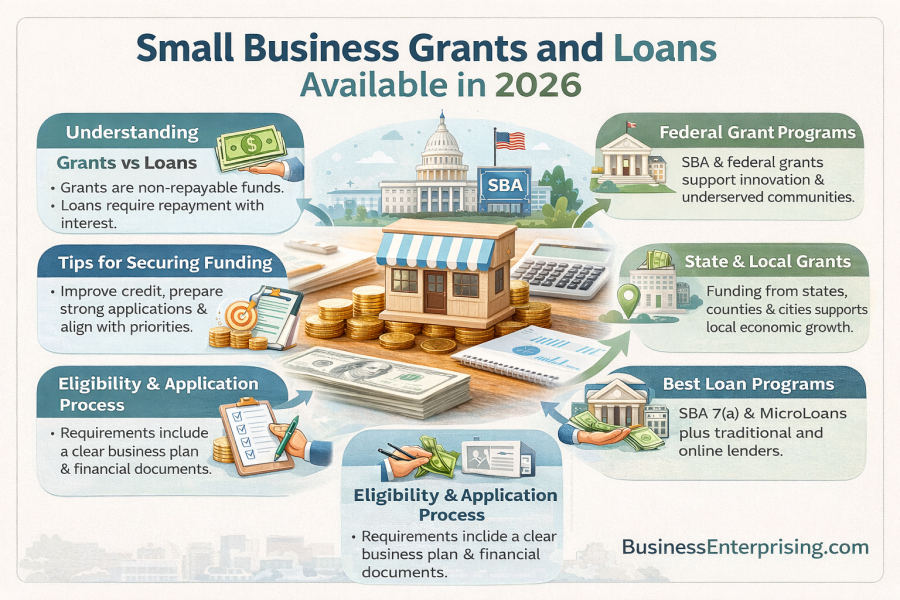
You need to understand how funding types differ before you apply. Small Business Grants and Loans serve different purposes, and each comes with distinct expectations. While grants provide funding that you do not repay, loans require repayment with interest.
First, grants often target specific groups or industries. For example, many programs support startups, minority owned businesses, or innovation focused companies. Because of this, you must meet strict eligibility requirements. Also, grant applications often require detailed proposals and supporting documents.
On the other hand, loans offer more flexibility. Lenders focus on your credit, revenue, and ability to repay. Therefore, you can access funding even if you do not qualify for grants. However, you must manage repayment carefully to avoid financial strain.
Next, you should consider how each option affects your cash flow. Grants allow you to invest without adding debt. Meanwhile, loans provide larger funding amounts but create monthly obligations. As a result, your financial planning becomes essential.
Also, timing plays a role in your decision. Grant approval can take months due to competition and review processes. In contrast, loans often move faster, especially through established lenders.
Ultimately, you should align your funding choice with your business stage and goals. When you understand these differences clearly, you can pursue the right path with confidence and focus.
Federal Grant Programs Available for Small Businesses in 2026
You can access several federal grant programs designed to support business growth. Small Business Grants and Loans at the federal level often focus on innovation, research, and community development. These programs aim to strengthen the economy and support entrepreneurship.
One major source of support comes from the Small Business Administration. This agency connects business owners with funding programs and resources. While it does not always provide direct grants, it partners with organizations that do.
For example, innovation based grants often support technology and research driven businesses. These programs reward companies that develop new solutions or improve existing systems. Therefore, you should highlight innovation in your application.
Also, federal grants often prioritize underserved communities. Many programs focus on women owned businesses, veterans, and minority entrepreneurs. Because of this, you may find opportunities that align with your background.
Next, you should prepare detailed documentation when applying. Federal applications often require business plans, financial projections, and clear use of funds. As a result, preparation increases your chances of approval.
Finally, you should monitor application deadlines closely. Federal programs follow strict timelines, and missing a deadline can delay your plans. When you stay organized and proactive, you can take full advantage of available funding opportunities.
State and Local Grant Opportunities for Entrepreneurs
You should not overlook funding available at the state and local level. Small Business Grants and Loans offered by local governments often provide accessible and targeted support. These programs focus on economic growth within specific regions.
First, many states offer grants to encourage job creation and business expansion. These programs often reward companies that invest in their communities. Therefore, you should highlight your local impact in your application.
Also, cities and counties frequently support small businesses through development initiatives. These programs may include funding for storefront improvements, marketing, or operational upgrades. As a result, you can access funding tailored to your location.
Next, minority owned and women owned businesses often benefit from local grants. Many municipalities prioritize inclusive economic development. Because of this, you may find programs designed specifically for your business type.
Additionally, local chambers of commerce and economic development offices can guide you. These organizations often share information about available funding opportunities. When you stay connected, you can identify programs early.
Finally, local grants often have simpler application processes than federal programs. While competition still exists, the pool of applicants may be smaller. Therefore, you can improve your chances by acting quickly and presenting a strong case.
Popular Small Business Loan Programs and Financing Options
You have several loan options available to fund your business in 2026. Small Business Grants and Loans often work together to provide balanced funding strategies. While grants offer support, loans provide larger and more flexible capital.
One of the most popular options is the SBA 7(a) Loan Program. This program offers funding for working capital, equipment, and expansion. Because it is government backed, lenders often provide favorable terms.
Another option is the SBA Microloan Program. This program targets smaller funding needs and supports startups. Therefore, it works well if you need limited capital to launch or stabilize your business.
Also, traditional bank loans remain a common choice. These loans typically require strong credit and financial history. However, they can provide significant funding when you meet the criteria.
Next, online lenders offer faster approval and flexible requirements. While interest rates may be higher, the speed can benefit urgent needs. As a result, you should compare options carefully before deciding.
Finally, you should review loan terms in detail. Interest rates, repayment schedules, and fees can affect your financial stability. When you understand these factors, you can choose a loan that supports your long term goals.
Eligibility Requirements and Application Process for Funding
You need to understand eligibility requirements before applying for funding. Small Business Grants and Loans often have strict criteria, and preparation can improve your results. Therefore, you should review each program carefully.
First, most programs evaluate your business structure and industry. Some grants target specific sectors, while loans may require established operations. Because of this, you must confirm that your business qualifies.
Also, financial documentation plays a major role in approval decisions. Lenders and grant providers often request tax returns, bank statements, and revenue reports. As a result, you should organize these documents in advance.
Next, your credit profile can influence loan approval. Strong credit signals reliability, which increases lender confidence. Therefore, you should review your credit and address any issues before applying.
Additionally, a clear business plan strengthens your application. You need to explain how you will use the funds and how they will support growth. When your plan shows direction, reviewers gain confidence in your business.
Finally, you should follow application instructions carefully. Missing information or incomplete forms can delay approval or lead to rejection. When you stay organized and thorough, you increase your chances of success.
Tips for Securing Funding and Increasing Approval Chances
You can improve your funding success with the right strategy. Small Business Grants and Loans require preparation, clarity, and persistence. Therefore, you should approach each application with a focused plan.
First, you should strengthen your financial profile. Lenders and grant reviewers look for stability and responsible management. Because of this, maintaining accurate records and improving credit can help your case.
Also, your business plan should clearly outline your goals and strategy. You need to show how funding will drive growth and sustainability. When your plan is clear, decision makers can see your potential.
Next, you should tailor each application to the specific program. Generic applications often fail to stand out. Instead, align your proposal with the program’s objectives and priorities.
Additionally, you should build relationships with funding organizations. Networking can provide insights into application expectations and upcoming opportunities. As a result, you can stay ahead of the competition.
Finally, persistence plays a key role in success. Rejections can happen, yet each attempt helps you improve. When you refine your approach and stay consistent, you increase your chances of securing funding.

FAQ
What is the main difference between grants and loans for small businesses?
Grants provide funding that you do not repay, while loans require repayment with interest over time. Grants often target specific groups or industries, and loans offer broader access. You should choose based on your financial situation, timeline, and long term business goals.
Are federal grants available for all types of small businesses?
Federal grants usually target specific industries such as technology, research, or community development. You may qualify if your business aligns with program goals. However, competition is high, so preparation and clear documentation can improve your chances of approval.
How can I find local grant opportunities for my business?
You can explore state and local government websites, economic development offices, and chambers of commerce. These sources often list active programs and eligibility details. Staying connected to local business networks can also help you identify new opportunities early.
What are the easiest loan options for startups in 2026?
Startup friendly options include microloans and certain online lenders with flexible requirements. These programs often focus on smaller funding amounts and faster approvals. However, you should review interest rates and repayment terms carefully before making a decision.
How do I increase my chances of getting approved for funding?
You can improve your chances by maintaining strong financial records, building a clear business plan, and aligning your application with program goals. Small Business Grants and Loans often require attention to detail, so submitting complete and accurate applications can make a strong difference.