
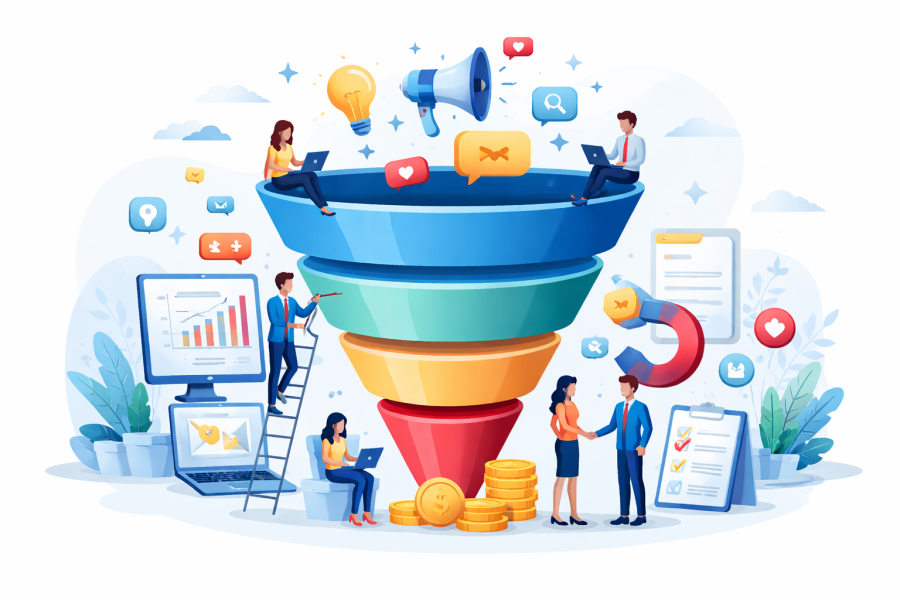
 You want to know how to build a marketing funnel that turns visitors into paying clients. So, how to build a marketing funnel starts with clarity and structure. First, you need to understand how people move from interest to action. Then, you must guide them with purpose at every step. Because attention is limited, your funnel must stay simple and focused. Also, you need to match your messaging to your audience’s intent. When you do this well, your funnel works with less effort.
Next, you should think about how your audience behaves online. For example, some visitors are ready to act, while others need time. Therefore, your funnel must speak to both groups. At the same time, you should create a path that feels natural and helpful. As a result, your prospects feel confident as they move forward.
In addition, consistency plays a key role in conversion. When your branding, messaging, and offers align, your funnel feels trustworthy. Meanwhile, strong calls to action guide visitors toward clear next steps. Because trust builds over time, each stage must deliver value.
Finally, you should treat your funnel as a system, not a one-time setup. As you collect data, you can refine your approach. Then, you improve results without increasing effort. Over time, your funnel becomes more efficient. Therefore, your business grows with greater stability and predictability.
UNDERSTANDING THE STAGES OF A HIGH-CONVERTING MARKETING FUNNEL
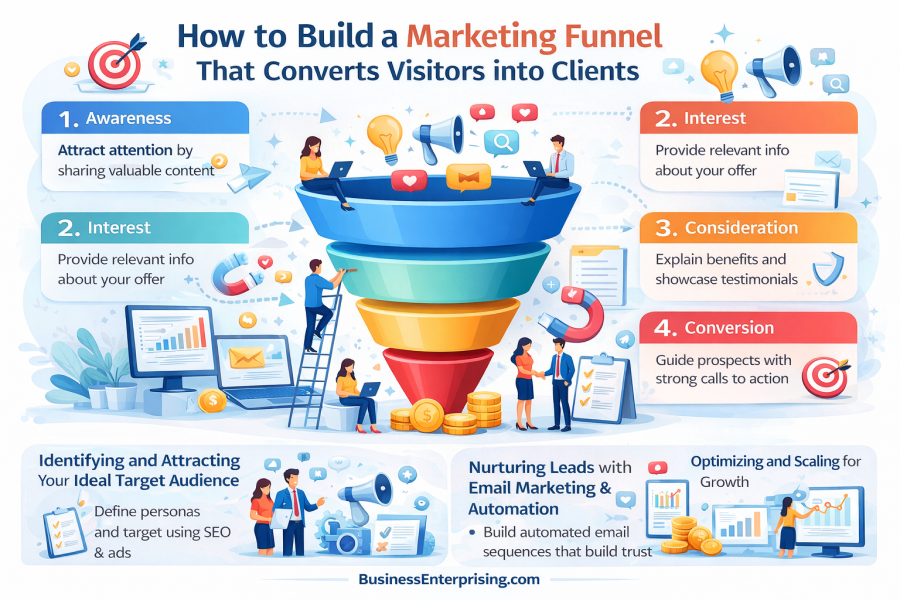
First, you need to understand the stages of a marketing funnel. Each stage reflects how your audience thinks and behaves. When you learn how to build a marketing funnel, you see how awareness leads to action. At the awareness stage, people discover your brand through content or ads. Therefore, your goal is to attract attention and spark interest.
Next, the interest stage develops curiosity. Here, visitors want to learn more about your offer. So, you should provide helpful and relevant information. Because people compare options, your content must stand out clearly. Then, you guide them into the consideration stage.
At this point, prospects evaluate your solution. They ask questions and weigh their options carefully. Therefore, you must address concerns and highlight benefits. At the same time, testimonials and case studies build trust. As a result, your audience feels more confident.
Finally, the conversion stage turns prospects into clients. Here, your call to action must be clear and direct. Because hesitation can delay decisions, you should remove friction. Also, you must simplify the process to encourage action.
Throughout each stage, alignment with user intent matters. When your message matches their needs, engagement increases. Then, your funnel flows smoothly. Over time, this structure improves conversion rates and client acquisition.
IDENTIFYING AND ATTRACTING YOUR IDEAL TARGET AUDIENCE
Before you build your funnel, you must define your audience clearly. When you learn how to build a marketing funnel, audience clarity becomes essential. First, you should create detailed buyer personas. These profiles include demographics, goals, and challenges. Because clarity improves targeting, your messaging becomes more effective.
Next, you need to identify pain points. When you understand your audience’s problems, you can offer real solutions. Therefore, your content becomes more relevant and engaging. At the same time, you should speak in clear and simple language. As a result, your message connects quickly.
Then, you must attract the right traffic. SEO helps you reach people searching for solutions. Meanwhile, social media builds awareness and engagement. Also, paid advertising allows precise targeting. Because each channel serves a purpose, you should use them strategically.
In addition, consistency across channels strengthens your presence. When your message stays aligned, your brand feels reliable. Then, your audience recognizes and trusts your business. Over time, this trust increases engagement and conversions.
Finally, you should track performance to refine your approach. When you analyze results, you learn what works best. Then, you adjust your strategy for better outcomes. As your targeting improves, your funnel attracts higher-quality leads.
CREATING COMPELLING LEAD MAGNETS THAT CAPTURE ATTENTION
To capture leads, you need a strong offer. When you study how to build a marketing funnel, lead magnets play a key role. First, your offer must solve a specific problem. Because people value quick wins, your content should deliver immediate benefit.
Next, you should choose the right format. Ebooks provide detailed insights, while checklists offer quick guidance. Meanwhile, webinars create engagement and trust. Also, free consultations allow direct interaction. Because each format serves a purpose, you should match it to your audience.
Then, your messaging must highlight value clearly. Visitors need to understand what they gain. Therefore, your headline should focus on outcomes. At the same time, your description should remain simple and direct. As a result, more people will opt in.
In addition, design and presentation matter. A clean layout improves readability and appeal. When your lead magnet looks professional, it builds trust. Then, your audience feels confident sharing their information.
Finally, you should test different offers to improve results. When you compare performance, you find what resonates most. Then, you refine your approach for higher conversions. Over time, your lead magnets become more effective at capturing attention.
BUILDING LANDING PAGES THAT MAXIMIZE CONVERSIONS
Your landing page is where conversions happen. When you explore how to build a marketing funnel, this step demands focus. First, your headline must capture attention quickly. Because visitors decide fast, clarity is essential.
Next, your content should stay concise and relevant. You need to highlight benefits without overwhelming the reader. Therefore, each section should guide the visitor forward. At the same time, visuals can support your message.
Then, your call to action must stand out clearly. Visitors should know exactly what to do next. Because confusion reduces conversions, simplicity matters. Also, your form should require only essential information.
In addition, trust signals improve credibility. Testimonials, reviews, and certifications build confidence. When visitors see proof, they feel more comfortable taking action. Then, your conversion rate improves.
Finally, page speed and mobile design affect performance. When your page loads quickly, users stay engaged. Also, a mobile-friendly layout improves accessibility. As a result, more visitors complete the process.

NURTURING LEADS WITH EMAIL MARKETING AND AUTOMATION
Once you capture leads, you must build relationships. When you learn how to build a marketing funnel, nurturing becomes essential. First, email marketing allows direct communication. Because inbox access is personal, your messages should feel relevant.
Next, you should create automated sequences. These emails guide prospects through your funnel. Therefore, each message should serve a purpose. At the same time, timing matters for engagement.
Then, segmentation improves personalization. When you group leads by behavior or interest, your content becomes more targeted. As a result, engagement increases. Also, personalized messages feel more meaningful.
In addition, you should provide consistent value. Educational content builds trust over time. When your audience learns from you, they see your expertise. Then, they feel more confident working with you.
Finally, you should monitor performance and adjust your strategy. Open rates and click rates reveal what works. Then, you refine your messaging for better results. Over time, your email strategy strengthens your funnel.
OPTIMIZING AND SCALING YOUR FUNNEL FOR CONTINUOUS GROWTH
After your funnel is active, you must improve it continuously. When you understand how to build a marketing funnel, optimization drives growth. First, analytics show how users move through your funnel. Because data reveals patterns, you can make informed decisions.
Next, A/B testing helps you compare variations. You can test headlines, offers, and layouts. Then, you identify what performs best. As a result, your conversions improve over time.
Then, conversion rate optimization focuses on removing friction. Small changes can lead to better results. Therefore, you should review each step carefully. At the same time, you should simplify the user experience.
In addition, scaling requires a strong foundation. When your funnel performs well, you can increase traffic. Paid ads and partnerships can expand your reach. Then, your results grow without losing efficiency.
Finally, you should review performance regularly. When you track trends, you stay ahead of changes. Then, you adapt your strategy quickly. Over time, your funnel becomes a reliable system for growth.
FAQ
What is a marketing funnel and why does it matter?
A marketing funnel guides prospects from awareness to conversion. It helps you structure your messaging and offers. Because each stage serves a purpose, your audience moves forward with clarity. As a result, your business attracts and converts more qualified leads.
How long does it take to see results from a marketing funnel?
Results depend on your strategy, traffic, and offer quality. Some funnels show early engagement within weeks. However, consistent improvements lead to stronger results over time. Therefore, regular testing and refinement help you achieve steady growth.
What is the most important part of a marketing funnel?
Each stage plays a role, though clarity and alignment matter most. When your message matches your audience’s needs, engagement improves. Also, a strong call to action encourages conversions. As a result, your funnel performs more effectively.
How do I improve my funnel conversion rate?
You can improve conversions by testing elements and removing friction. Clear messaging, simple forms, and strong trust signals help. Also, analyzing data reveals weak points. Then, you adjust your funnel for better performance.
What tools help with building and managing a funnel?
Tools for email automation, analytics, and landing pages support your funnel. When you combine these tools, you streamline your process. How to build a marketing funnel becomes easier with the right systems in place. Then, you manage and scale more efficiently.