 Starting a business requires more than a strong idea. You need funding that supports your goals and growth pace. Many founders search for the best startup funding sources to move from concept to execution. However, each option brings different expectations, risks, and benefits.
As you begin, you may feel uncertain about where to start. Therefore, understanding your options helps you make confident financial decisions. Some funding paths offer control, while others provide rapid growth opportunities. At the same time, each choice affects ownership, flexibility, and long term direction.
Moreover, your funding strategy should match your business model. For example, service businesses may rely on early revenue. Meanwhile, technology startups may seek outside investment sooner. Because of this, you need a clear view of how each funding type works.
In addition, timing plays an important role in your decision. Early stage businesses often rely on personal resources or small investments. Later, you may explore larger funding rounds or institutional support. As your company grows, your funding needs will evolve.
Furthermore, many entrepreneurs overlook the importance of planning before raising capital. When you prepare properly, you improve your chances of success. You also position your business as a credible opportunity for investors or lenders.
Ultimately, the right funding source supports both your current needs and future vision. Therefore, learning about each option allows you to choose wisely. As you continue reading, you will gain clarity on how to fund your startup effectively.
Bootstrapping and Self-Funding: Building from Within
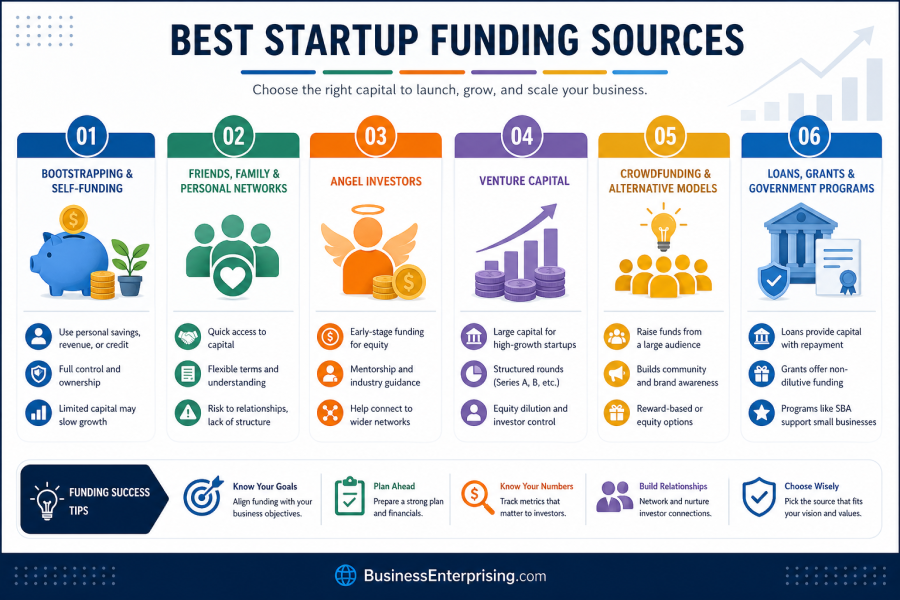
Bootstrapping allows you to build your business using your own financial resources. Many entrepreneurs begin this way to maintain full control. As you explore the best startup funding sources, this option often appears first. It requires discipline, planning, and careful cash management.
When you use personal savings, you avoid outside influence on decisions. Therefore, you retain complete ownership and direction. At the same time, you gain flexibility in how you operate daily. However, your available capital may limit how quickly you grow.
In many cases, founders also use early business revenue to reinvest into operations. As a result, your company grows organically over time. This method encourages efficiency and careful spending habits. Moreover, it helps you validate your business model without external pressure.
However, bootstrapping can create financial strain if not managed well. Since you rely on your own funds, risk increases personally. Therefore, you must plan budgets carefully and monitor cash flow closely. In addition, unexpected expenses can impact your progress.
Another factor to consider is growth speed. While you maintain control, scaling may take longer. Yet, many successful businesses have grown steadily through this approach. Because of this, patience becomes an important part of your strategy.
Ultimately, bootstrapping works best when you want independence and gradual growth. As you evaluate your options, consider your risk tolerance and financial capacity. This approach may provide a strong foundation for your business.
Friends, Family, and Personal Networks
Many entrepreneurs turn to people they know when seeking early funding. This approach offers quick access to capital and flexible terms. As you review the best startup funding sources, personal networks often play a key role. These relationships can provide support during your early stages.
When you accept funding from friends or family, you often avoid strict requirements. Therefore, you may receive funds faster than traditional methods. At the same time, you can negotiate terms that fit your situation. However, this flexibility comes with emotional considerations.
Because personal relationships are involved, expectations must remain clear. You should outline agreements in writing to avoid misunderstandings. In addition, open communication helps maintain trust over time. This step protects both your business and your relationships.
Moreover, investors in your network may not have business experience. As a result, they may not provide strategic guidance. Still, their support can help you reach early milestones. You can use these funds to test your concept and build traction.
However, mixing business with personal relationships carries risk. If your business faces challenges, tensions may arise. Therefore, you must approach these arrangements with professionalism and clarity. This mindset helps preserve long term relationships.
Ultimately, funding from your network can be valuable when handled carefully. As you move forward, treat these investors with respect and transparency. This approach builds trust and supports your business growth.
Angel Investors: Early-Stage Capital with Mentorship
Angel investors provide funding to startups in exchange for equity. They often invest during the early stages of development. As you explore the best startup funding sources, angel investors offer both capital and experience. This combination can support your growth effectively.
When you work with an angel investor, you gain more than funding. Many angels bring industry knowledge and valuable connections. Therefore, they can help you refine your strategy and avoid common mistakes. Their guidance often accelerates your progress.
In addition, angel investors may take a long term interest in your success. They often support your business beyond the initial investment. This involvement can include mentorship and introductions to other investors. As a result, you gain access to broader opportunities.
However, you must exchange equity for this support. This means you give up a portion of ownership. Therefore, you should evaluate how much control you are willing to share. Clear agreements help define expectations on both sides.
Moreover, angel investors expect a return on their investment. They typically look for businesses with strong growth potential. Because of this, you need a clear plan and compelling vision. Preparation improves your chances of securing funding. Ultimately, angel investors can play a meaningful role in your early growth. As you consider this option, focus on building strong relationships. This approach helps you gain both funding and valuable support.
Venture Capital: Scaling with Institutional Investment
Venture capital firms invest in startups with high growth potential. They provide larger amounts of funding compared to early stage investors. As you review the best startup funding sources, venture capital stands out for scaling opportunities. It supports rapid expansion and market reach.
When you secure venture capital, you often enter structured funding rounds. These rounds include stages like Series A and Series B. Each stage reflects your business growth and performance. Therefore, you must meet specific milestones to progress.
In addition, venture capital firms expect strong returns on their investments. They focus on businesses that can grow quickly and dominate markets. Because of this, they often require detailed financial projections. You must demonstrate clear growth strategies and execution plans.
However, accepting venture capital involves giving up equity and some control. Investors may influence key business decisions. Therefore, you should align with partners who share your vision. This alignment supports long term success.
Moreover, venture capital funding can increase pressure to perform. You must meet targets and scale efficiently. At the same time, this pressure can drive disciplined growth. Many companies benefit from the structure and accountability provided.
Ultimately, venture capital suits businesses aiming for rapid expansion. As you consider this path, evaluate your readiness for growth and investor expectations. This decision shapes your company’s future direction.
Crowdfunding and Alternative Funding Models
Crowdfunding allows you to raise money from a large group of people. This approach uses online platforms to reach potential supporters. As you explore the best startup funding sources, crowdfunding offers a unique path. It combines funding with market validation.
When you launch a crowdfunding campaign, you present your idea to the public. Supporters contribute funds in exchange for rewards or equity. Therefore, you can generate interest while securing capital. This process helps test your product or concept early.
In addition, crowdfunding builds a community around your brand. Backers often become early advocates and customers. As a result, you gain both funding and exposure. This dual benefit can strengthen your market position.
However, running a successful campaign requires effort and planning. You must create compelling content and clear messaging. In addition, you need to promote your campaign actively. Without strong engagement, results may fall short.
Moreover, some platforms involve fees or strict requirements. You should review these terms before launching your campaign. Understanding the process helps you set realistic expectations. Preparation increases your chances of success.
Ultimately, crowdfunding offers flexibility and visibility for your startup. As you evaluate this option, consider your ability to engage an audience. This approach can support both funding and brand growth.
Loans, Grants, and Government Funding Programs
Loans and grants provide structured funding options for startups. These sources often come from financial institutions or government programs. As you consider the best startup funding sources, these options offer different advantages. They can support your business without giving up ownership.
When you take a loan, you receive funds that must be repaid over time. Therefore, you need a clear plan for managing debt. Interest rates and terms vary depending on the lender. Understanding these details helps you make informed decisions.
In contrast, grants provide funding that does not require repayment. These funds often support specific industries or goals. Because of this, you must meet eligibility requirements. Applying for grants may take time and preparation.
In addition, government programs often support small businesses and innovation. Agencies like U.S. Small Business Administration offer resources and funding opportunities. These programs can provide guidance along with financial support.
However, both loans and grants involve application processes. You must prepare documentation and demonstrate your business potential. This effort can be time intensive but worthwhile. Proper preparation improves your chances of approval. Ultimately, these funding options work well for structured growth plans. As you evaluate them, consider your financial needs and repayment capacity. This approach helps you choose the right path for your business.

Key Takeaways
• You should match your funding source to your business stage and growth goals.
• You can retain control through bootstrapping, though growth may take more time.
• You should treat funding from personal networks with clear agreements and professionalism.
• You can gain mentorship and connections through angel investors along with capital.
• You should prepare for equity tradeoffs when working with venture capital firms.
• You can use loans, grants, or crowdfunding to support growth without giving up ownership.
FAQ
| Question | Answer |
|---|---|
| What are the best funding options for early stage startups? | Early stage startups often rely on personal savings, friends, family, or angel investors. These options provide accessible capital without complex requirements. They also allow you to validate your idea before pursuing larger funding sources. Choosing the right option depends on your financial situation and growth goals. |
| How do I choose the best startup funding sources for my business? | You should evaluate your business model, growth expectations, and risk tolerance. Some businesses benefit from organic growth, while others need rapid scaling. The best startup funding sources align with your long term vision and operational needs. Planning ahead helps you select the most effective path. |
| Is crowdfunding a reliable way to fund a startup? | Crowdfunding can be effective when you have a strong concept and clear messaging. It allows you to raise funds while building early customer interest. However, success depends on marketing, audience engagement, and preparation. You should treat it as both a funding and promotional strategy. |
| What are the risks of taking venture capital funding? | Venture capital involves giving up equity and sharing control. Investors expect rapid growth and measurable results. This pressure can impact decision making and timelines. You should align with investors who understand your vision and support your strategy. Careful planning reduces potential conflicts. |
| Are grants better than loans for startup funding? | Grants offer funding without repayment, which makes them attractive. However, they often have strict eligibility requirements and application processes. Loans provide quicker access but require repayment with interest. You should compare both options based on your financial capacity and business needs. |