
 ECommerce Trends continue to reshape how you attract, engage, and convert customers online. Today, buyers expect fast, seamless, and personalized shopping experiences across every touchpoint. As a result, your strategy must evolve to match rising expectations and shifting behavior. Moreover, digital tools now give you more control over how customers discover and interact with your brand.
At the same time, competition continues to increase across nearly every e-commerce category. Therefore, you need to stay informed about what is working now, not what worked years ago. While some tactics remain effective, many others require adaptation to remain relevant. In fact, small changes in user experience can drive meaningful increases in revenue.
Meanwhile, technology continues to influence how customers make purchasing decisions. For example, mobile usage, social media engagement, and automated recommendations all play a role. Because of this, you must think beyond basic website functionality and focus on the full customer experience.
In addition, consumer expectations now center around speed, convenience, and transparency. As a result, brands that fail to meet these expectations often lose potential sales. However, businesses that adopt modern strategies often gain a competitive edge.
Ultimately, your success depends on how well you understand and apply these evolving trends. By staying informed and proactive, you position your business for long term growth.
The Rise of AI-Powered Personalization in Online Shopping
AI-powered personalization continues to reshape how you connect with your customers online. Today, shoppers expect tailored experiences that reflect their interests and behavior. As a result, your ability to deliver relevant content directly impacts your conversion rates. Moreover, personalization helps you build stronger relationships with your audience over time.
Because of these ECommerce Trends, businesses now rely on data to guide product recommendations. For example, AI systems analyze browsing behavior, purchase history, and engagement patterns. Then, they present products that align closely with customer preferences. As a result, your store feels more intuitive and engaging to each visitor.
At the same time, personalized experiences improve how customers move through your site. When users see relevant products, they spend more time browsing and exploring. Therefore, you increase both average order value and overall revenue potential.
In addition, email marketing and retargeting campaigns benefit from AI personalization. You can send tailored messages based on past interactions and interests. As a result, your communication feels more relevant and less intrusive.
Meanwhile, automation allows you to scale personalization without increasing your workload. Instead of manual segmentation, AI handles complex data analysis in real time. Because of this, you deliver consistent experiences across large audiences.
Ultimately, personalization creates a more engaging shopping experience that encourages repeat purchases. By adopting AI tools, you align your strategy with modern customer expectations.
Social Commerce and the Shift Toward In-App Purchasing
Social commerce continues to transform how you reach and convert potential customers. Platforms like Instagram, TikTok, and Facebook now function as direct sales channels. As a result, customers can discover and purchase products without leaving the app. Moreover, this seamless experience reduces friction and increases conversion opportunities.
Because of these ECommerce Trends, your content strategy must align with platform behavior. Short videos, product showcases, and influencer collaborations drive engagement and visibility. Therefore, you need to create content that feels natural within each platform environment.
At the same time, social proof plays a major role in purchase decisions. When users see reviews, comments, and shares, they gain confidence in your brand. As a result, your products become more appealing and trustworthy.
In addition, in-app purchasing simplifies the buying process for your audience. Customers can move from discovery to checkout in seconds. Because of this, impulse purchases become more common and valuable.
Meanwhile, targeted advertising within social platforms allows you to reach specific audiences. You can refine your campaigns based on demographics, interests, and behavior. As a result, your marketing becomes more efficient and effective.
Ultimately, social commerce allows you to meet customers where they already spend their time. By integrating sales into your content, you create a seamless path to purchase.
The Growing Importance of Mobile-First and Fast Checkout Experiences
Mobile-first design now shapes how customers interact with your online store. Most users browse and shop using their smartphones. Therefore, your website must perform well on smaller screens. Because of these ECommerce Trends, mobile optimization directly impacts your sales performance.
At the same time, slow loading times create frustration and lead to lost sales. When pages take too long to load, users often leave your site. As a result, your conversion rates decline. Therefore, you need fast, responsive design across all devices.
In addition, checkout experience plays a major role in purchase completion. Complicated forms and multiple steps discourage buyers from finishing transactions. However, streamlined checkout processes improve conversion rates significantly.
Moreover, one-click checkout options reduce friction during the buying process. Customers can complete purchases quickly without entering repeated information. As a result, you capture more sales with less effort from your users.
Meanwhile, digital wallets continue to gain popularity among online shoppers. Payment methods like mobile wallets offer convenience and security. Because of this, you should integrate these options into your checkout system. Ultimately, a smooth mobile experience keeps customers engaged and encourages repeat purchases. By focusing on speed and simplicity, you improve both user satisfaction and revenue growth.
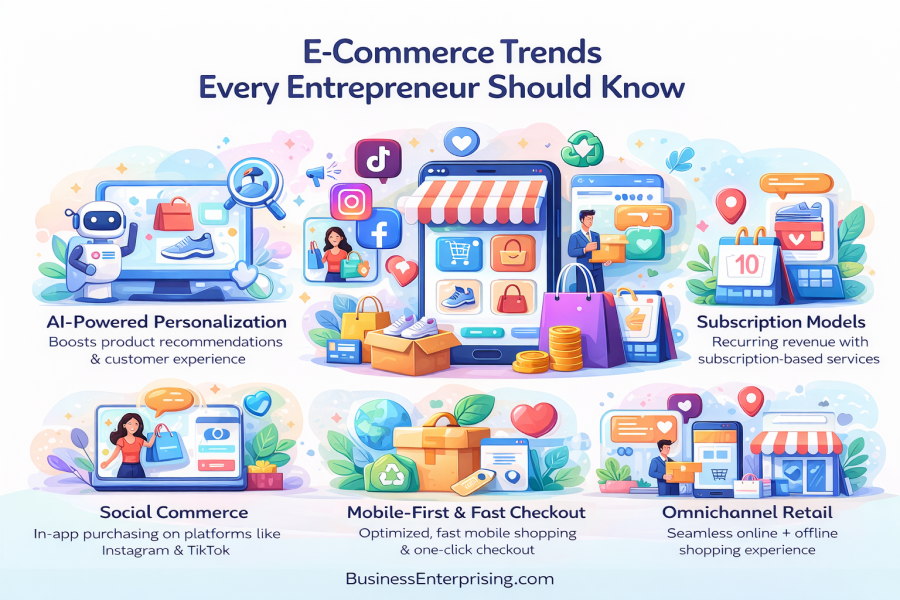
Subscription Models and Recurring Revenue Strategies
Subscription models continue to gain traction across many e-commerce sectors. These models provide consistent revenue and build long term customer relationships. As a result, you create predictable income that supports business growth. Because of these ECommerce Trends, many brands now offer subscription options.
At the same time, subscriptions increase customer lifetime value. When customers commit to recurring purchases, they stay connected to your brand. Therefore, you reduce the need for constant customer acquisition efforts.
In addition, subscription services create convenience for your customers. They receive products regularly without needing to reorder each time. As a result, you improve customer satisfaction and retention rates.
Moreover, you can customize subscription offerings based on customer preferences. Flexible plans allow users to choose delivery frequency and product selection. Because of this, your service feels more personalized and user friendly.
Meanwhile, subscription models allow you to forecast revenue more accurately. You can plan inventory, marketing, and operations with greater confidence. As a result, your business becomes more stable and scalable.
Ultimately, recurring revenue strategies strengthen your financial foundation. By offering subscriptions, you build deeper connections with your customers and support long term success.
Sustainability and Ethical Consumerism as Competitive Advantages
Sustainability continues to influence how customers choose where to shop. Many buyers now prefer brands that align with their values. As a result, your approach to ethical practices affects purchasing decisions. Because of these ECommerce Trends, sustainability becomes a key differentiator.
At the same time, transparent sourcing builds trust with your audience. Customers want to understand where products come from and how they are made. Therefore, clear communication strengthens your brand reputation.
In addition, eco-friendly packaging reduces environmental impact and appeals to conscious consumers. When you adopt sustainable materials, you show commitment to responsible practices. As a result, your brand becomes more attractive to modern buyers.
Moreover, ethical labor practices play a role in brand perception. Customers increasingly support companies that treat workers fairly. Because of this, your policies can influence customer loyalty.
Meanwhile, sustainability efforts also create marketing opportunities. You can highlight your practices through content, product pages, and social media. As a result, you connect with customers who share similar values.
Ultimately, ethical consumerism shapes how customers evaluate brands. By prioritizing sustainability, you build trust and strengthen long term relationships with your audience.
The Expansion of Omnichannel and Hybrid Retail Experiences
Omnichannel strategies continue to reshape how customers interact with brands. Today, shoppers expect seamless experiences across online and offline channels. As a result, your business must integrate multiple touchpoints effectively. Because of these ECommerce Trends, consistency across channels becomes essential.
At the same time, customers often switch between devices and platforms during their buying process. They may browse online, visit a store, and complete a purchase later. Therefore, your systems must support this behavior smoothly.
In addition, services like buy online and pick up in store improve convenience. Customers enjoy flexibility in how they receive their purchases. As a result, you enhance customer satisfaction and engagement.
Moreover, integrated data allows you to track customer interactions across channels. You gain insights into behavior and preferences. Because of this, you can refine your marketing and sales strategies.
Meanwhile, consistent branding across platforms strengthens your identity. Customers recognize your business regardless of where they interact with you. As a result, you build trust and familiarity. Ultimately, omnichannel experiences create a unified customer journey. By connecting all touchpoints, you provide a smoother and more engaging shopping experience.
FAQ
| Question | Answer |
|---|---|
| What are the most important ecommerce trends right now? | The most important trends include AI personalization, social commerce, mobile optimization, subscription models, sustainability, and omnichannel experiences. These trends shape how customers interact with brands and make purchasing decisions. Businesses that adopt these strategies often improve engagement, conversion rates, and long term growth potential. |
| How does AI personalization improve online sales? | AI personalization analyzes customer behavior and delivers relevant product recommendations. This creates a more engaging shopping experience and increases the likelihood of purchases. As customers see products that match their interests, they spend more time on your site and are more likely to return. |
| Why is mobile optimization so important for e-commerce? | Mobile optimization matters because most customers shop using smartphones. A fast and responsive mobile site improves user experience and reduces frustration. When checkout is simple and quick, more users complete their purchases. This directly impacts your conversion rates and overall revenue. |
| How can small businesses use ECommerce Trends effectively? | Small businesses can apply ECommerce Trends by focusing on high impact areas like mobile performance, social media selling, and personalization tools. They do not need large budgets to implement these strategies. Instead, they can start with simple improvements that enhance customer experience and build over time. |
| What is the benefit of an omnichannel retail strategy? | An omnichannel strategy connects all customer touchpoints into one seamless experience. This allows customers to move between online and offline channels without disruption. As a result, businesses create a more convenient shopping process, which increases customer satisfaction, loyalty, and overall sales performance. |