

 Running a business without a clear financial plan creates unnecessary stress and limits your growth potential. That is why learning how to create a business budget matters from the start. You need a system that guides decisions and supports long term stability. Moreover, a working budget helps you stay focused on what actually drives results. As a result, you gain better control over spending and future planning.
However, many business owners treat budgeting as a simple record of expenses. Instead, you should view it as a forward looking tool that shapes strategy. For example, a well built budget highlights opportunities and potential risks before they impact your business. Therefore, you can act early and avoid costly mistakes. At the same time, you build confidence in your financial decisions.
In addition, a strong budget allows you to align your resources with your goals. You can allocate funds to marketing, operations, and growth efforts more effectively. Meanwhile, you reduce waste and focus on activities that generate real returns. This approach helps you stay disciplined and intentional with every dollar.
Ultimately, a business budget should work for you, not against you. When you design it correctly, it becomes a practical tool you rely on daily. As you move forward, you will see how each step builds a budget that supports consistent growth.
Understanding the Purpose of a Business Budget
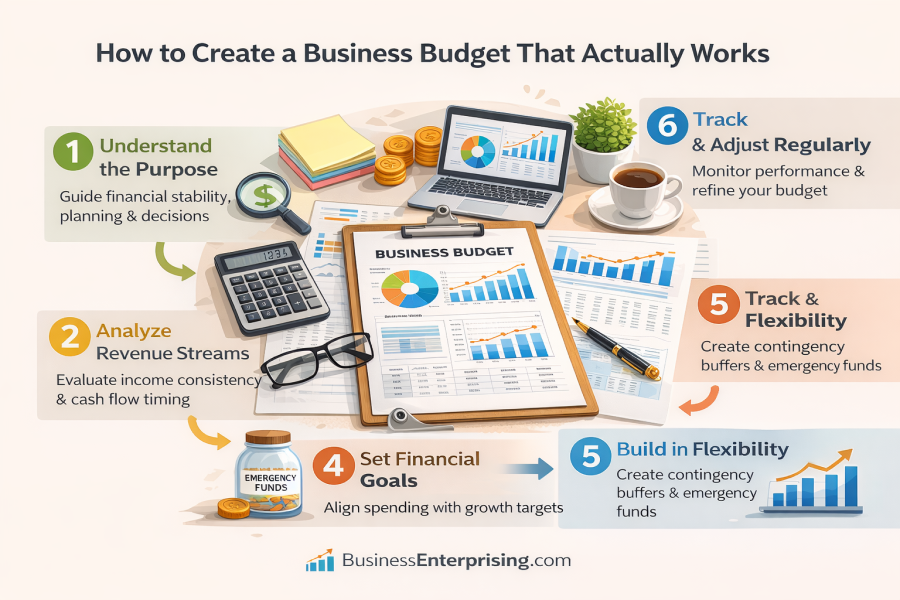
Before you build a budget, you need to understand what it is meant to accomplish. Many business owners focus only on tracking expenses. However, a budget should guide decisions and shape your overall strategy. Therefore, you must approach it with a clear purpose in mind.
First, a budget gives you visibility into your financial position. You can see where your money comes from and where it goes. As a result, you make more informed decisions about spending and investments. At the same time, you reduce uncertainty and improve planning accuracy.
Next, a strong budget supports long term growth. It helps you allocate resources toward activities that generate revenue. For example, you can invest more in marketing channels that perform well. Meanwhile, you can reduce spending in areas that do not produce results. This balance keeps your business moving forward.
In addition, budgeting strengthens your ability to respond to change. When you understand your numbers, you can adjust quickly. Therefore, you avoid reactive decisions that harm your business. Instead, you stay proactive and focused on your goals.
As you learn how to create a business budget, remember that its purpose goes beyond tracking costs. It acts as a decision making framework that supports growth and stability. When you treat it this way, your budget becomes a powerful tool for managing your business.
Analyzing Your Revenue Streams and Cash Flow Patterns
A strong budget starts with a clear understanding of your revenue and cash flow. You need to know how money enters your business and when it arrives. Without this insight, your budget will rely on assumptions instead of facts.
First, identify your primary revenue streams. You should separate consistent income from variable income. For example, recurring clients provide stability, while one time sales may fluctuate. Therefore, you can build more accurate projections based on these patterns.
Next, examine your cash flow timing. Revenue does not always arrive when you expect it. As a result, you may face gaps between income and expenses. By tracking these patterns, you can plan ahead and avoid cash shortages. This step helps you maintain smooth operations.
In addition, consider seasonal trends in your business. Many industries experience fluctuations throughout the year. For instance, sales may increase during certain months and slow down during others. Therefore, you should adjust your budget to reflect these changes. This approach prevents surprises and supports better planning.
As you refine your process, you will see how to create a business budget that reflects real financial behavior. You move beyond guesses and rely on data instead. Consequently, your budget becomes more reliable and easier to manage. Over time, this clarity allows you to make smarter decisions and maintain financial stability.
Identifying Fixed, Variable, and Hidden Expenses
To build a reliable budget, you must understand your expenses in detail. Many business owners underestimate costs because they overlook certain categories. Therefore, you need to break down expenses into clear groups.
First, identify your fixed expenses. These costs remain consistent each month. Examples include rent, salaries, and software subscriptions. Because they stay predictable, you can plan for them easily. This stability forms the foundation of your budget.
Next, examine your variable expenses. These costs change based on business activity. For example, marketing spend and inventory costs may increase during growth periods. Therefore, you need to track them closely and adjust your budget as needed. This flexibility helps you stay aligned with your goals.
In addition, pay attention to hidden expenses. These often include maintenance, transaction fees, and unexpected costs. While they may seem small, they add up over time. As a result, they can impact your profitability if ignored.
When you understand all expense categories, you gain a complete financial picture. This clarity helps you control spending and avoid surprises. As you learn how to create a business budget, this step becomes essential. You build a structure that reflects real costs instead of estimates. Over time, this accuracy strengthens your financial management and supports steady growth.
Setting Realistic Financial Goals and Spending Limits
A budget should align with your business goals, not limit them. However, you need realistic expectations to make it work effectively. Setting clear financial targets helps you stay focused and disciplined.
First, define your revenue goals based on past performance and current trends. You should avoid overestimating potential income. Instead, use data to guide your projections. This approach keeps your budget grounded in reality.
Next, establish spending limits that support your priorities. For example, you may allocate more funds to marketing or product development. At the same time, you should control costs in less impactful areas. Therefore, your budget reflects your strategic direction.
In addition, connect your goals to measurable outcomes. You need to track progress and evaluate performance regularly. As a result, you can adjust your budget based on actual results. This ongoing process keeps your business aligned with its objectives.
As you refine your approach, you will better understand how to create a business budget that supports growth. Your goals become achievable because they are based on real data. Meanwhile, your spending stays controlled and intentional. Over time, this balance helps you build a stronger and more stable business.
Building Flexibility Into Your Budget for Uncertainty
Even the best plans face unexpected changes. That is why flexibility plays an important role in budgeting. You need a system that adapts to new circumstances without disrupting your operations.
First, create a contingency buffer within your budget. This reserve helps you handle unexpected expenses or revenue drops. As a result, you maintain stability during challenging periods. This buffer acts as a safety net for your business.
Next, consider setting aside an emergency fund. This fund provides additional protection during major disruptions. For example, it can cover operating costs during slow periods. Therefore, you reduce financial stress and maintain continuity.
In addition, build adjustable categories into your budget. Some expenses can be scaled up or down based on performance. For instance, marketing spend can increase during growth phases. Meanwhile, it can decrease when revenue slows. This flexibility keeps your budget responsive.
As you continue learning how to create a business budget, flexibility becomes a key factor. You move away from rigid plans and embrace adaptability. Consequently, your business stays prepared for change. Over time, this approach helps you manage uncertainty with confidence and maintain steady progress.
Tracking, Reviewing, and Adjusting Your Budget Regularly
Creating a budget is only the beginning. To make it effective, you need consistent monitoring and adjustments. Without regular review, your budget quickly becomes outdated.
First, track your actual income and expenses against your budget. This comparison reveals gaps and trends. As a result, you can identify areas that need attention. This step keeps your financial data accurate and relevant.
Next, review your budget on a regular schedule. Weekly or monthly reviews work well for most businesses. During these reviews, you evaluate performance and make necessary changes. Therefore, your budget stays aligned with current conditions.
In addition, use simple tools or dashboards to monitor your finances. These tools provide clear insights into your performance. As a result, you can make faster and more informed decisions. This efficiency improves your overall financial management.
As you refine your process, you will see how to create a business budget that evolves with your business. You move from a static document to a dynamic system. Consequently, your budget supports continuous improvement. Over time, this discipline strengthens your financial control and helps you achieve your goals.
FAQ
| Question | Answer |
|---|---|
| Why is a business budget important? | A business budget helps you manage income and expenses with clarity. It supports better decision making and long term planning. When you track financial activity consistently, you gain control over spending and identify growth opportunities more effectively. |
| How often should I update my business budget? | You should review your budget at least once a month. Regular updates help you stay aligned with current financial conditions. By tracking actual performance against projections, you can adjust quickly and keep your business on a stable path. |
| What is the biggest mistake in budgeting? | Many business owners underestimate expenses or overestimate revenue. This creates unrealistic expectations and financial strain. A better approach involves using real data and adjusting projections based on actual performance to maintain accuracy. |
| How do I handle unexpected expenses? | You should include a contingency buffer in your budget. This reserve helps cover sudden costs without disrupting operations. In addition, maintaining an emergency fund provides extra protection during challenging periods. |
| What is the best way to learn how to create a business budget? | The best approach involves combining data analysis with consistent tracking. You should review income, expenses, and performance regularly. Over time, you refine your process and build a budget that reflects real business activity and supports growth. |